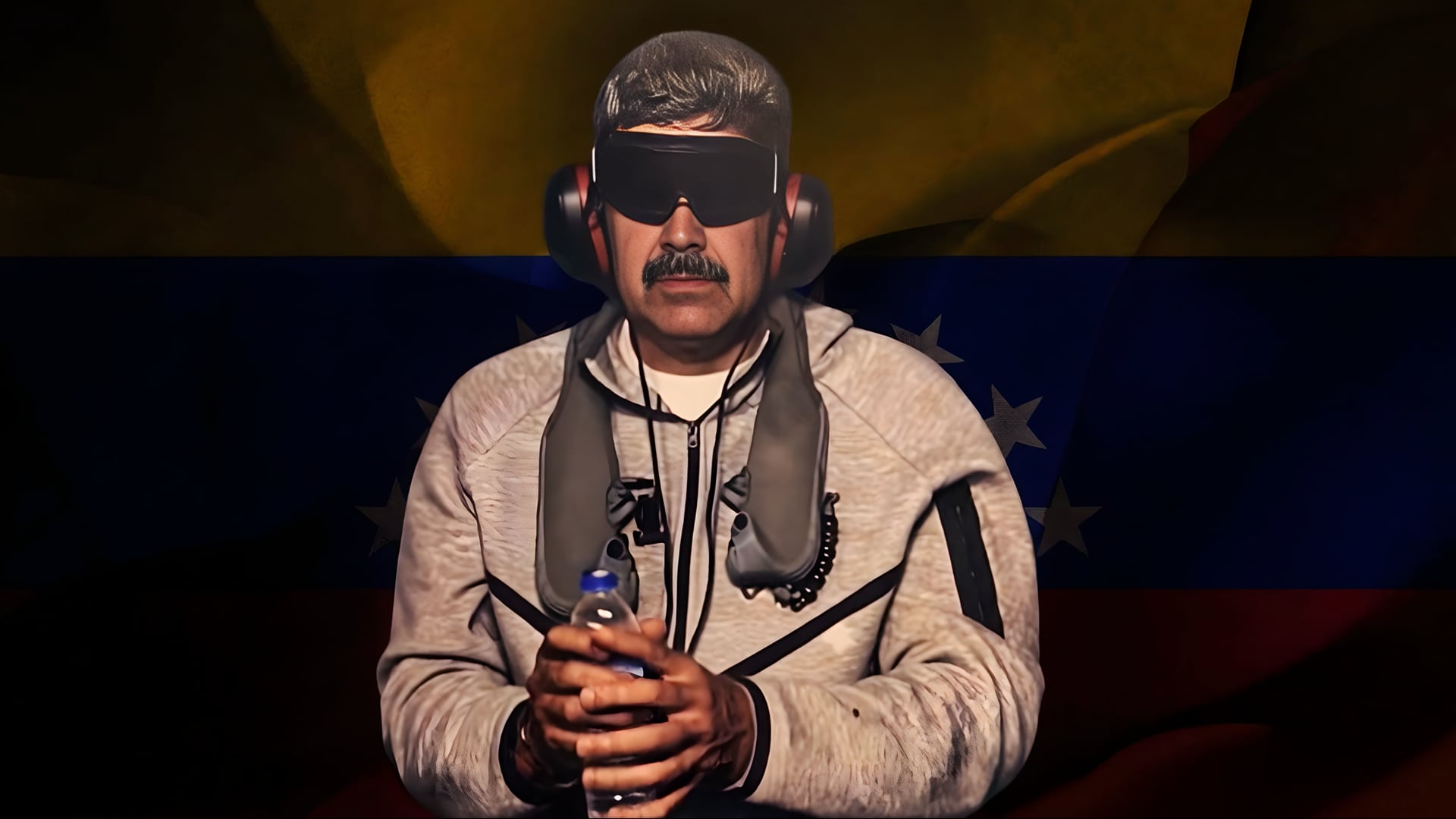
On January 3, 2026, U.S. forces conducted an operation inside Venezuela that resulted in the capture of President Nicolás Maduro after armed resistance and an estimated 80 killed on the ground. The operation raised foundational legal questions: under what circumstances may the United States lawfully use force against a sitting head of state—whether to capture or to kill—and what limits do international and U.S. domestic law impose on such action?
Those questions sit at the intersection of international law, constitutional war powers, criminal law, and executive authority. In a TalksOnLaw interview, Scott R. Anderson, a fellow at the Brookings Institution and a senior editor at Lawfare, walks through the legal frameworks governing when force against a foreign leader is permissible—and when it crosses into unlawful use of force.
Watch free on Vimeo.
The Baseline Rule Under International Law
As Anderson explains, international law begins from a strong presumption against the use of force. Under Article 2(4) of the United Nations Charter, states may not use force against another state’s territorial integrity or political independence unless one of two conditions is satisfied: authorization by the UN Security Council, or the exercise of self-defense in response to an armed attack.
Absent one of those justifications—or the territorial state’s consent—sending military forces into another country to seize its president is presumptively unlawful.
Armed Conflict Versus Self Defense
The legal analysis changes if an armed conflict exists between the United States and the foreign state. In that context, the law of armed conflict governs who may be targeted.Anderson stresses that even in armed conflict, a leader is targetable only if they qualify as a lawful military target under international humanitarian law—for example, because they are a combatant, a commander exercising military authority, or otherwise a military objective. Political leadership alone does not strip a civilian of protection.
International law permits the use of force in self-defense under narrow conditions. Article 51 of the UN Charter preserves the inherent right of self-defense in response to an armed attack, and most states recognize a limited right of anticipatory self-defense where an attack is imminent and unavoidable.
According to Anderson, applying that theory to the Maduro example would need to meet stringent requirements. In the views of most states, the United States would need to show that Venezuela posed an imminent threat of armed attack and that no reasonable alternatives—such as diplomacy or non-forcible measures—were available. The United States has historically adopted a more generous understanding of both requirements than most states. But in treating narcotics smuggling as the equivalent of an “armed attack,” the Trump administration is stepping well beyond both international and past U.S. practice.
Capture Versus Killing
As Anderson explains, framing an operation as a capture mission may carry different political and rhetorical weight than a targeted killing. International law, however, looks to substance rather than labels. If an operation foreseeably requires lethal force, or predictably results in significant casualties, calling it “law enforcement” does not insulate it from the law governing the use of force. A forcible capture carried out by military means on foreign territory still implicates the UN Charter and the sovereignty of the territorial state.
At the same time, international law does not impose more onerous legal thresholds for capture than for targeted killing. As Anderson notes, the law of armed conflict and the jus ad bellum framework are not designed to discourage restraint. Where force is otherwise lawful, attempting to capture rather than kill does not create an additional legal penalty or higher authorization requirement. To the contrary, the legal framework is structured to avoid disincentivizing less violent means when they are feasible.
Domestic Constraints and the “Assassination” Ban
Executive Order 12333 is frequently described as a domestic “assassination ban,” but it is not a statute and it does not bind a President in the way federal laws do. It is an internal executive directive—one President instructing the executive branch how to operate—and as Anderson points out, it may be revised, waived, or superseded by a subsequent executive order or controlling presidential determination. In that sense, EO 12333 functions primarily as a constraint on subordinates and internal process, not as an external legal prohibition on presidential action.
That does not mean there are no domestic constraints. As Anderson explains, the meaningful legal limits arise elsewhere. Any operation targeting a foreign leader would still require a plausible legal foundation such as the President’s Article II authority and any applicable statutory authorizations or restrictions.
Criminal Charges Are Not a Use-of-Force License
The United States has charged Maduro with narcotics and corruption offenses, but Anderson emphasizes that criminal liability does not itself authorize military action. Domestic criminal jurisdiction and international legality operate on separate planes. Even where U.S. courts may proceed with a prosecution following an extraterritorial capture, that does not retroactively legalize the use of force under international law or eliminate potential state responsibility.
A Possible Self-Defense Theory
One legal theory the administration may offer as a defense---and that it has relied on in the context of its military strikes against alleged narcotics traffickers in international waters---is that Venezuela’s involvement in large-scale narcotics trafficking constituted a use of force or an armed attack against the United States, thereby triggering the U.S. right of self-defense under Article 51 of the UN Charter.
Under this theory, the argument would be that Venezuela, through state actors or with the knowing support of senior leadership, materially assisted the importation of illicit drugs into the United States. That conduct, the administration could contend, inflicted severe and sustained harm on U.S. territory and population—fueling violence, public-health crises, and loss of life at a scale that warrants treatment as more than ordinary transnational crime.
The theory would likely stress the cumulative and continuous nature of the harm, arguing that traditional notions of imminence are poorly suited to threats that unfold over time rather than through discrete attacks.
As Anderson explains, this argument sits at the margins of existing international law at best. Prevailing international practice has treated narcotics trafficking—even when state-facilitated—as a matter for law enforcement and international cooperation, not as an armed attack justifying unilateral military force. Recasting such transnational criminal activity as a use of force, according to Andreson, is not the generally accepted understanding of international law and may shift the existing distinction between crime and war under the UN Charter framework. At the time of this recording, the U.S. administration has not publicly articulated a formal legal justification for the Maduro operation.