Cyberbullying and the First Amendment
An interview with Lee Rowland
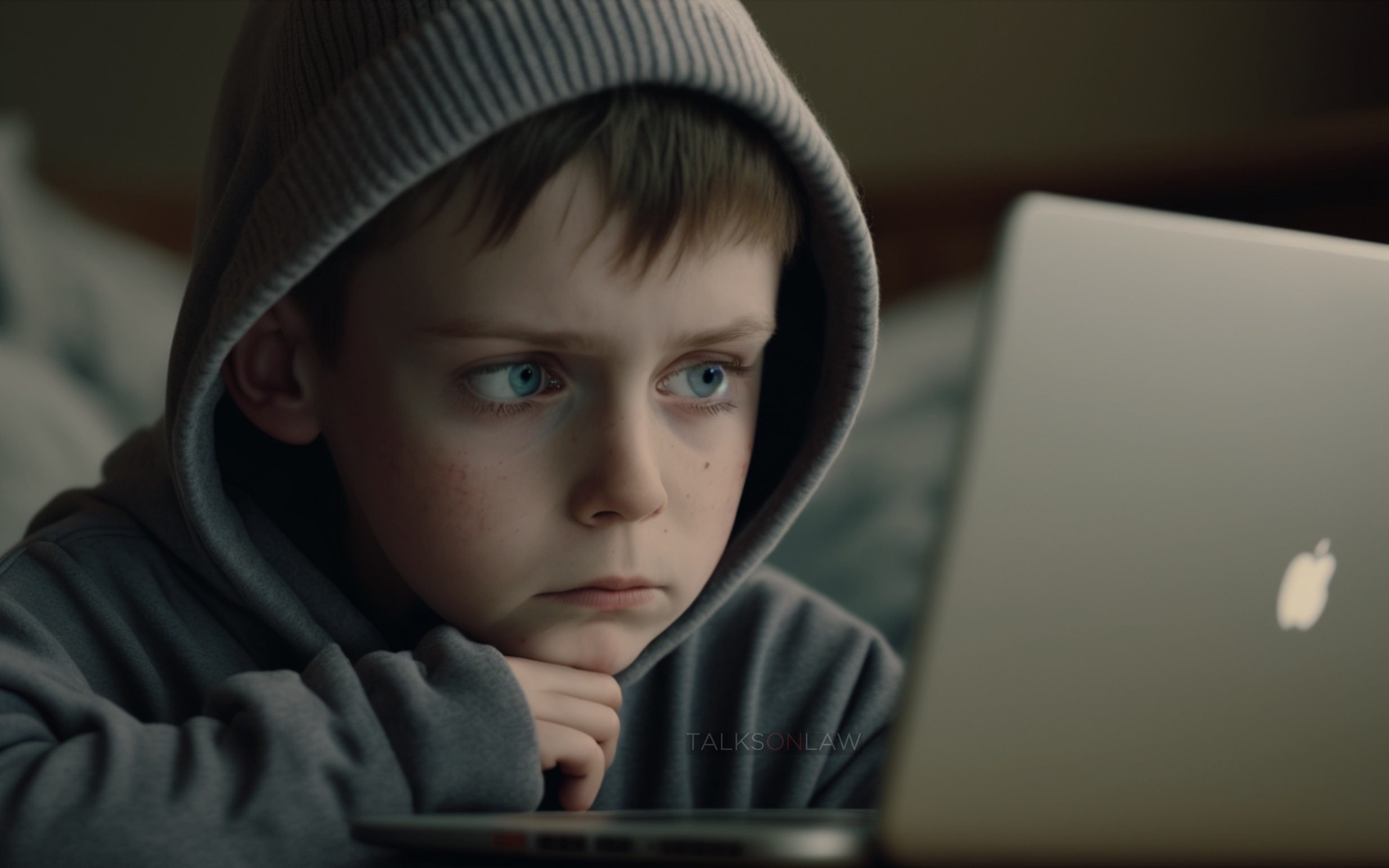
Americans spend more of their lives online every year, and the tone there has curdled — threats, slurs, and harassment that would get someone arrested on a street corner pour out of comment sections with no consequence at all. Legislatures keep responding with cyberbullying laws, and courts have repeatedly struck them down. Why? What does the First Amendment actually allow the government to do about cruelty on the internet, and what should it do instead?
In this TalksOnLaw interview, Joel Cohen sits down with Lee Rowland, executive director of the National Coalition Against Censorship, who spent years litigating First Amendment cases at the ACLU's Speech, Privacy, and Technology Project. Rowland is a committed free-speech advocate who is nonetheless blunt that online threats are real crimes — and her argument is that the problem is not too few laws but a system that has no idea how to enforce the ones it has.
Same Rules, Different World
"Everything is the same online, and everything is different," Rowland begins. Doctrinally, the Supreme Court settled in Reno v. ACLU that the First Amendment applies identically to digital and analog speech: if the government cannot censor you in a park, it cannot censor you on Facebook. The categories it can reach are few. Obscenity, tethered to community standards, is a shrinking and arguably obsolete category in the internet age. Fighting words are a withering relic of an era when insults demanded satisfaction, and hard to apply where there is no one to punch. What remains is true threats and incitement — speech intended and likely to produce fear of physical violence. A threat to stab someone is a crime whether it is said face to face or on Twitter. The difference is practical: the digital version has to be unmasked, traced across jurisdictions, and understood by a precinct intake officer who does not know whether a Reddit thread is in his district. That practicality gap, Rowland argues, is a large part of what emboldens trolls. The rules exist; nobody applies them.
What Cyberbullying Actually Looks Like
Rowland is candid about the harm, including her own experience of the sexist abuse that follows women who speak publicly online. She walks through the torrent of racist and misogynist messages aimed at Leslie Jones after the Ghostbusters remake, a campaign she saw from an unusual vantage point, having represented Milo Yiannopoulos in a separate First Amendment matter. For a working comedian, being driven off Twitter is a professional injury, not merely an emotional one, and she does not minimize either.
Why Cyberbullying Laws Keep Losing
The trouble, she explains, is that most cyberbullying statutes reach past fear of physical harm into emotional distress — and the First Amendment has never let the government criminalize hurting someone's feelings, because one person's distress is another person's political opinion. She points to Europe's hate speech laws as the cautionary tale: a Spaniard arrested for tweeting that his local police were lazy after police were made a protected class, Palestinian rights advocates charged as antisemites. Her case study is Albany County's law, which made it a crime to post information intended to "annoy, harass, taunt, torment, intimidate, upset" or distress another person, and which was used to charge a fifteen-year-old for a digital burn book about classmates. The New York Civil Liberties Union took the case and New York's highest court struck the law down; North Carolina's Supreme Court did the same to a near-identical statute. Harassment, she stresses, is different and survives precisely because it regulates conduct rather than content: repeatedly contacting someone after being told to stop is a crime whether you say "peanut butter" or "I'll stab you." What the law cannot do is punish speech about someone, because every political conversation begins with a complaint.
First Amendment 2.0
The conversation's final turn is the one Rowland finds most consequential. The First Amendment binds only the government, and every consonant typed online passes through a private company first. Twitter can ban trolls for any reason or none. That, she argues, makes the moment "First Amendment 2.0": a century of soapbox-in-the-park doctrine rendered quaint by platforms that have quietly become the public forum. Her warning is not that they moderate but how — without due process, without explanation or appeal, and under political pressure that arrives almost entirely from the censorship side because everyone has a cause. Her own preference is a platform where she can see who hates her, find the neo-Nazis, and answer them with better ideas — and she would rather pay the price of online cruelty than surrender the tool that lets people organize against oppressive regimes, which shut down Facebook and Twitter for exactly that reason.
What to Know Now
The Supreme Court has since addressed several threads of this conversation, often in the direction Rowland argued. In Packingham v. North Carolina, it described social media as among the most important modern places for exchanging views, striking a law that barred sex offenders from it. In Mahanoy Area School District v. B.L., it held 8–1 that a school could not punish a student for a vulgar off-campus Snapchat post — a school-discipline case rather than a criminal one, but one that echoes the NYCLU's argument in Albany County. In Counterman v. Colorado, it held that a true-threats conviction requires at least recklessness about how the words would be received, a mental-state requirement that makes the online threat prosecutions Rowland wants more principled, and in some cases harder to bring. And in Moody v. NetChoice, reviewing Texas and Florida laws that would have forced platforms to carry speech, the Court's reasoning treated content moderation as protected editorial judgment, though it remanded without a final ruling — reinforcing her point that "First Amendment 2.0" is being written by private actors. Some of the pressures she described have since shifted: X and Meta have scaled back significant parts of their moderation, so much of the current debate concerns too little curation rather than too much, and several state laws restricting minors' access to social media have been preliminarily enjoined on First Amendment grounds. Broad cyberbullying statutes have continued to fare poorly in court. Her prescription — prosecute real threats and harassment, refuse to criminalize distress, and demand due process from the platforms — remains consistent with where the doctrine has settled.
About Lee Rowland
“The First Amendment's language is unbelievably absolute. 'Congress shall make no law.'”
Lee Rowland is the Executive Director of the National Coalition Against Censorship, where she oversees the organization's legal and government advocacy, direct program work, and public education, and runs the Free Expression Network, a collaboration of dozens of free expression advocates and organizations. She previously served as Policy Director at the New York Civil Liberties Union and, before that, as a senior staff attorney with the ACLU’s Speech, Privacy, and Technology Project. Lee has extensive experience as a litigator, lobbyist, and public speaker, and has served as lead counsel in federal First Amendment cases involving public employee speech rights and the First Amendment rights of online speakers.