Police Technology - From Body Cameras to Facial Recognition
An interview with Prof. I. Bennett Capers
Most of us hear "technology" and think of faster phones and self-driving cars. But it is quietly remaking one of the most consequential encounters in American public life: the moment a police officer decides to stop a citizen. Body cameras, facial recognition, gun-detecting scanners, algorithms that flag suspicion on their own, and a sea of personal data are all arriving at once. The usual question is what these tools let the police do to us. This conversation asks a different one: what could they do for us?
In this TalksOnLaw interview, Joel Cohen sits down with Bennett Capers, a former federal prosecutor in the Southern District of New York who now holds the Waxberg Chair at Fordham Law School, where he directs the Center on Race, Law and Justice. Capers, who served on New York's Civilian Complaint Review Board and chaired the academic committee under the stop-and-frisk decree, makes a provocative case: that surveillance, properly controlled, may be a tool for citizens rather than against them.
The Case for the Camera
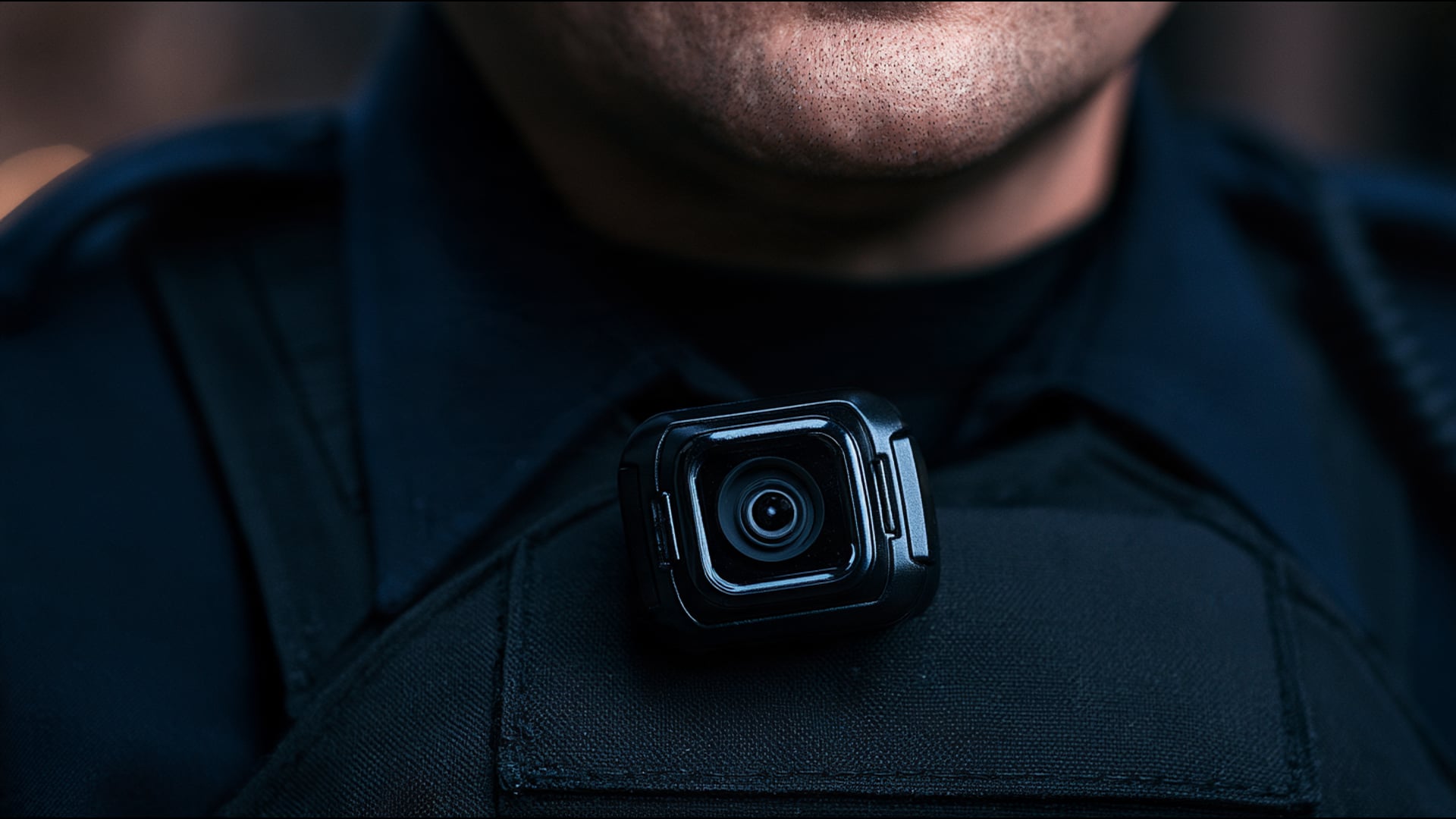
Capers begins with the body camera and the theory behind it — accountability through transparency. He points to the North Charleston shooting in which an officer's account of a justified killing collapsed the moment a passerby's phone video surfaced, and to a South Carolina classroom where a student's recording exposed an officer dragging a girl from her chair. The federal government championed the cameras; Judge Scheindlin made them a condition of New York's stop-and-frisk remedy; the city's review board asked for more. But Capers is quick to name the limit. The police control the footage. There is no obligation to release it, and a body camera by design shows the officer's point of view and nothing else. His answer is to widen the lens: the James Blake takedown was captured not by a body camera but by a hotel's surveillance camera, one of thousands in a city already watched. The honest question, he argues, is not whether to be on camera — that ship has sailed — but who controls what the cameras see.
Who Watches the Footage
The conversation turns to the mechanics of control. Capers wants public access through a process, not a live feed, so that a citizen alleging abuse outside a building can point to the camera above the door. He notes the cameras cut both ways, rebutting false complaints and documenting officers doing exactly what we hope they do — and he draws an analogy to recorded interrogations, which police departments resisted for years and now prize because they prove a confession was clean. He flags the on-off switch as an obvious problem, the intrusion of cameras into homes and onto bystanders, and a point that receives too little attention: surveillance has never been distributed equally. The cameras cluster in Times Square and in public housing, and body cameras add still more scrutiny to communities already under the most.
Terry v. Ohio in the Age of Facial Recognition
Capers's centerpiece is a thought experiment built on Terry v. Ohio, the 1968 case that let Detective McFadden stop two men casing a Cleveland storefront on reasonable suspicion alone. Give McFadden today's tools — facial recognition, big data, a terahertz scanner that detects a firearm from across the street — and he would know everything about the pair in seconds. Then Capers flips it: those two men could be him and his best friend, two Black men who love to window-shop. The same technology would tell the officer that neither is armed and that one is a law professor, and there would be no stop at all. Against New York's 4.4 million stops, 84 percent of them of Black or Hispanic people, he asks what the alternative is. Officers already police on implicit bias; technology, he argues, might counter it — and a scanner that reveals a phone rather than a gun could save a life. He is candid about false positives and about databases that may soon include every face on the internet, and lands on his reframing of the whole debate: not what technology can do for the police, but what it can do for the rest of us.
What to Know Now
Capers's question has only grown sharper, and the law has moved on several of his fronts. His hope that facial recognition could be perfected met the government's own data: a landmark federal evaluation found most algorithms produce far more false positives for Black and Asian faces, and Detroit's wrongful arrest of Robert Williams on a bad match ended in a 2024 settlement that bars arrests on a facial-recognition hit alone and produced one of the strictest police policies in the country. San Francisco became the first major city to ban the technology outright, and a state-by-state patchwork of guardrails has followed. The big-data concern reached the Supreme Court in Carpenter v. United States, which now requires a warrant for cell-phone location history. His call for public control took statutory form in New York's POST Act, which compels the NYPD to disclose its surveillance tools and was strengthened in 2025. Body cameras, meanwhile, became standard equipment in most large departments, New York repealed the 50-a law that shielded officer records, and a 2022 executive order put cameras on federal officers. The tools are all here; the fight Capers foresaw — over who controls them, and whom they serve — is the live one.
About Prof. I. Bennett Capers
“The question isn't, 'What can technology do for the police?' We should really ask, 'What can technology do for us?'”
Bennett Capers is the Stanley D. and Nikki Waxberg Chair and Professor of Law at Fordham Law School, where he serves as Associate Dean for Research and directs the Center on Race, Law, and Justice. He is an expert in criminal law and procedure, and evidence law. Prior to joining Fordham, he taught at Brooklyn Law School, where he was the Stanley A. August Professor of Law, and before that at Hofstra University School of Law, where he served as Associate Dean of Faculty Development in 2010-11. Prior to teaching, he spent nearly ten years as an Assistant U.S. Attorney in the Southern District of New York. His work trying several federal racketeering cases earned him a nomination for the Department of Justice’s Director’s Award in 2004. He also practiced with the firms of Cleary, Gottlieb, Steen & Hamilton and Willkie Farr & Gallagher. He clerked for the Hon. John S. Martin, Jr. of the Southern District of New York. His numerous articles and essays have been published in leading law reviews, including the California Law Review, Columbia Law Review, Harvard Law Review, and Michigan Law Review, and he is the co-editor of Critical Race Judgments and Feminist Judgments: Rewritten Criminal Law Opinions (Cambridge University Press). He is an elected member of the American Law Institute and has been appointed to the New York State Judicial Screening Committee. In 2013, he served as Chairperson of the AALS 2013 Conference on Criminal Justice. That same year, Judge Scheindlin appointed him to Chair the Academic Advisory Council to assist in implementing the remedial order in the stop-and-frisk class action Floyd v. City of New York. He has also served as a Commissioner on the NYC Civilian Complaint Review Board.