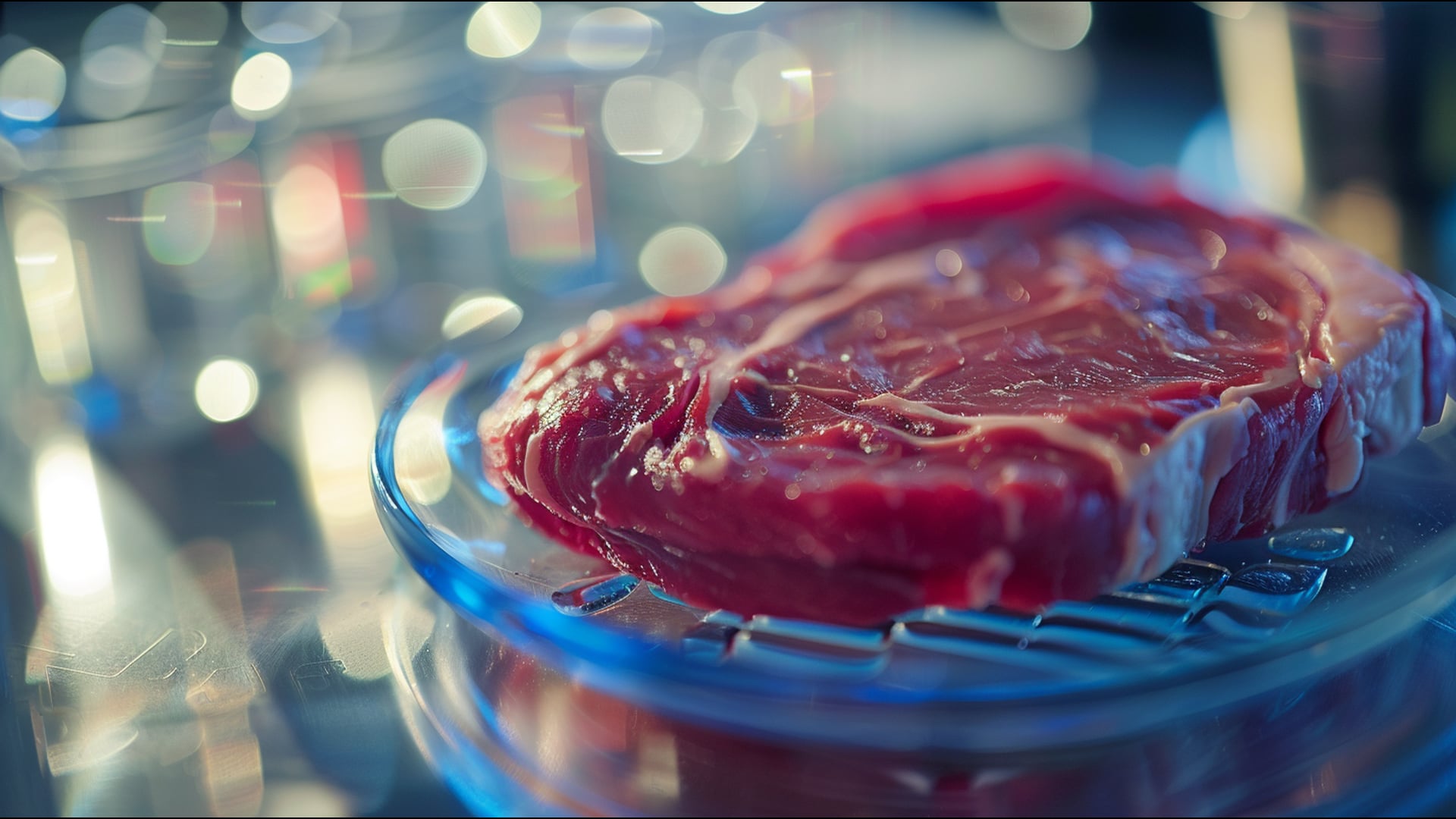
On May 1, 2024, Florida became the first state to make it a crime to sell a food the federal government had approved as safe. Senate Bill 1084 bans the manufacture and sale of cultivated meat, grown from animal cells rather than slaughtered animals, and makes a violation a misdemeanor. The stated reasons ranged from food safety to the "global elite." The real one, says Michael Roberts, is not hard to find: "the number one rationale is to protect the agriculture industry."
In this TalksOnLaw interview, recorded in June 2024, Joel Cohen speaks with Michael Roberts, Executive Director of the Resnick Center for Food Law and Policy and Professor from Practice at UCLA School of Law, about what cultivated meat is, why states are criminalizing it, and what a century of food-law fights, from pink margarine to Proposition 12, predicts about how this one ends.
What Cultivated Meat Is and Why Florida Banned It
Roberts explains the technology and the regulatory path the FDA and USDA agreed on in 2019, with the first federal clearances in 2023. He walks through the Florida law, its criminal penalties, and the justifications offered, and separates the ones with some substance (we do not know the long-term effects of a new food) from the one that drives the politics. He notes the irony that a state whose governor derides Europe is adopting a precautionary stance Brussels would recognize, and he traces the copycat bills in Alabama, Tennessee, and elsewhere, as well as Italy's national ban.
Food as Politics
Why has a product almost no one has eaten become a culture-war marker? Roberts connects the bans to the subsidies, concentrated animal feeding operations, and farm-state politics that shape American food law, and to California's Proposition 12, where the Supreme Court let one state's animal-welfare standards reach producers everywhere. He describes how consumer-choice conservatives and animal-welfare progressives end up on the same side, and why the industry's own financial fragility may matter more than any court ruling.
Preemption and the Lessons of Margarine
The cultivated-meat companies' best legal argument, Roberts says, is federal preemption, but it is weaker here than in the labeling cases, because Congress has not occupied the field; a federal regulatory scheme would change that. He then tells the story of the "pink laws," the nineteenth-century state statutes that required margarine to be dyed an unappetizing color to protect dairy farmers, the Supreme Court's 1898 decision striking one down, and Wisconsin's holdout ban that lasted until 1967, and draws the parallel to what states may try next. "Trust is the biggest word" in food regulation, he concludes, and in the end "consumers will have the last voice."
What to Know Now
Seven states now ban or pause cultivated meat: Florida, Alabama, Mississippi, Montana, Nebraska, Indiana (a two-year moratorium), and Texas, whose ban took effect in September 2025 and sunsets in 2027. Upside Foods' challenge to the Florida law has largely failed: the district court denied a preliminary injunction in October 2024 and dismissed the preemption claims, the Eleventh Circuit affirmed the denial of the injunction in March 2026, and only a dormant Commerce Clause claim remains. Meanwhile federal approvals have continued, including Wildtype's cultivated salmon in June 2025, Mission Barns' cultivated pork fat in 2025, and Believer Meats' chicken in November 2025, weeks before that company became insolvent. The industry's capital problem has become acute: the Good Food Institute counted about 140 companies worldwide in 2026, but investment fell to roughly $74 million in 2025, a fraction of the 2021 peak. Italy's 2023 ban is under challenge in the European Union, and in Europe the Netherlands and the U.K. have moved toward permitting tastings and pet food.