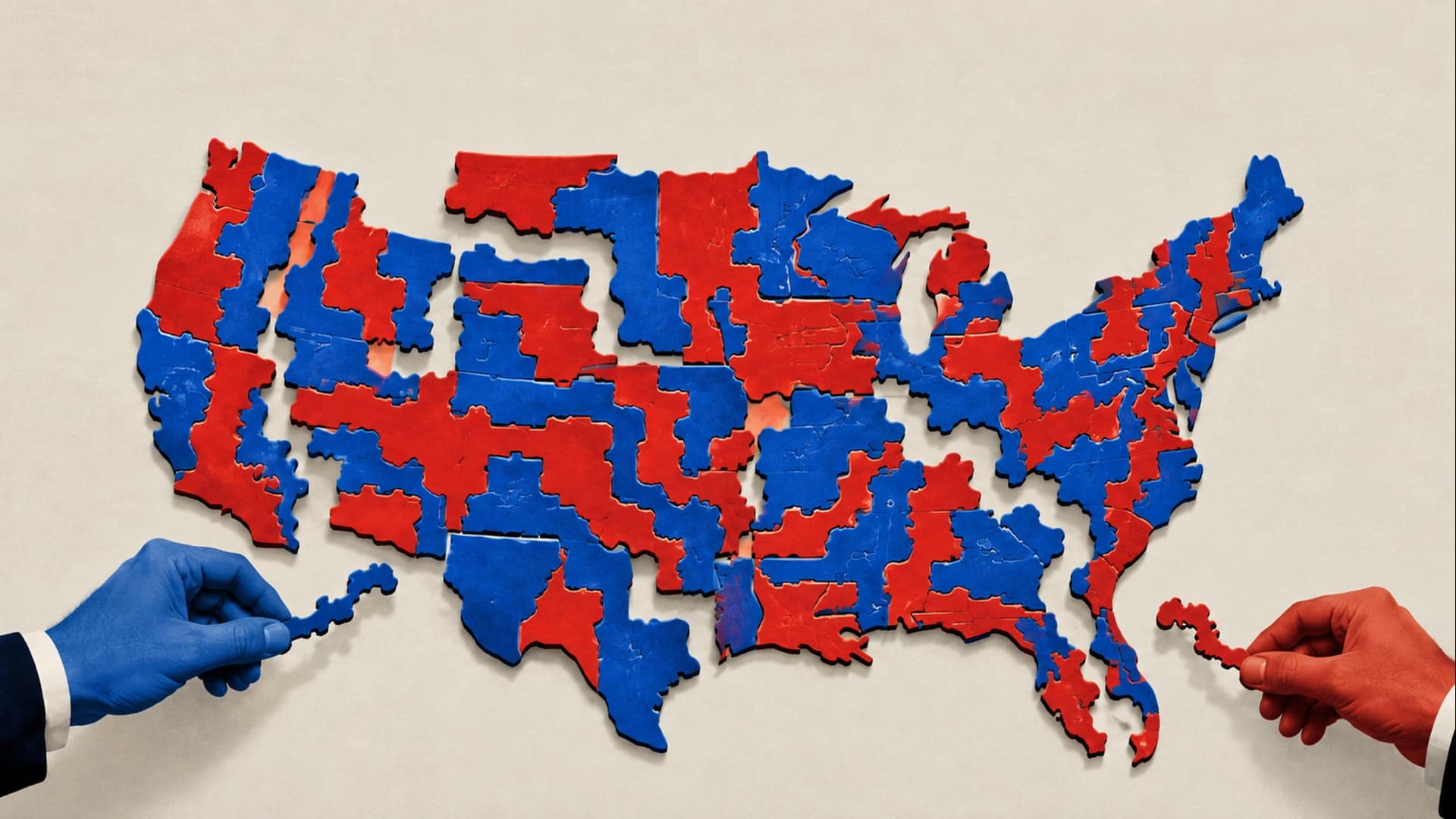
Political parties are not in the Constitution. The framers hoped the structure they designed would keep them from forming at all. Yet parties now run the primaries, organize Congress, raise and spend most of the money in American elections, and, after a Supreme Court decision this summer, can spend it in coordination with their own candidates without limit. Are they private associations with First Amendment rights, or public institutions the state may regulate?
In this TalksOnLaw interview, recorded days before the 2026 midterm elections, Joel Cohen speaks with Richard Pildes, Sudler Family Professor of Constitutional Law at NYU School of Law and faculty director of NYU's Democracy Project, about what political parties are under American law, how they gained and lost power over two centuries, and how the law treats them in primaries, campaign finance, and the administration of elections.
What a Party Is, and How It Lost Its Power
Pildes explains the three dimensions of a party (the enduring organization, the officeholders, and the voters) and why the courts treat parties sometimes as public actors and sometimes as private ones. He traces the framers' hostility to parties through Madison's Federalist No. 10, the acceptance of parties by the 1830s, Martin Van Buren's invention of the national convention, and the three developments that weakened American parties relative to those in other democracies: the direct primary in the early twentieth century, the decline of patronage and the Supreme Court's decision that patronage hiring is unconstitutional for most positions, and the shift to presidential primaries in the 1970s. He contrasts the American approach with post-war European constitutions that protect parties, and with Germany's "militant democracy," which requires parties to be internally democratic, a requirement the U.S. Supreme Court has held states may not impose.
Primaries: Who Chooses the Nominee
The conversation traces the case law from the state-court decisions upholding the direct primary over parties' associational objections, through the white-primary cases culminating in Smith v. Allwright, to California Democratic Party v. Jones, in which the Supreme Court struck down California's blanket primary as a violation of party members' right to choose their nominees. Pildes explains why he favors the all-candidate ("unified") primary with ranked-choice voting that Alaska adopted in 2020 and faces a repeal measure this November, and discusses the 2026 nominating fights that illustrate the tension between national party leadership and primary electorates: Graham Platner's rise and withdrawal in Maine, Abdul El-Sayed's primary win in Michigan, and Ken Paxton's defeat of Senator John Cornyn in Texas after President Trump's endorsement. He also addresses the two Dan Sullivans on Alaska's Senate ballot, sham candidates, and the legality of a party spending in the other party's primary.
Money: Buckley, Super PACs, and NRSC v. FEC
Pildes explains why elections keep getting more expensive (since 2000, control of the House, Senate, or White House has changed hands in every election but two), the consequence of Buckley v. Valeo's rule that independent spending cannot be limited, and the simultaneous growth of small-donor giving and spending by the very wealthy. He walks through National Republican Senatorial Committee v. FEC, in which the Supreme Court this summer struck down the federal limits on what parties may spend in coordination with their own candidates, limits that had been as low as about $60,000 in a House race. In his view the decision is on balance a good thing: fifty years of regulation have shown that money cannot be driven out of politics, only channeled, and it is better channeled through parties, which must disclose their donors and answer to voters, than through outside groups that do neither. He explains why disclosure, once a consensus position upheld in every campaign-finance case including Citizens United, has become politically contested.
Running the Election: Mail Ballots and What to Watch
Turning to the administration of the 2026 election, Pildes reviews the federal government's efforts to restrict mail ballots: the Supreme Court's decision in Watson v. Republican National Committee, holding that federal law does not bar states from counting ballots postmarked by Election Day and received afterward (an argument in which Justice Kavanaugh quoted Pildes's own scholarship), and the Postal Service rule that the courts blocked for this cycle. He explains the partisan history of mail voting, why the data suggest mail ballots shift the mode of voting more than they increase turnout, and what concerns him most in the final days: the possibility of federal law enforcement seizing ballots or machines on assertions of fraud, and the broader loss of public confidence in a process that, in his assessment, is run with integrity. Asked for one reform, he chooses the all-candidate primary.
What to Know Now
This conversation was recorded shortly before the November 3, 2026 election. Alaska's Ballot Measure 2, which would repeal the state's top-four primary and ranked-choice general election, is on the ballot in that election; a similar measure failed in 2024 by 737 votes. NRSC v. FEC was decided June 30, 2026 (6–3, Kavanaugh, J.), overruling FEC v. Colorado Republican Federal Campaign Committee (2001); the base limits on direct party contributions to candidates remain. Watson v. RNC was decided June 29, 2026 (5–4, Barrett, J.).