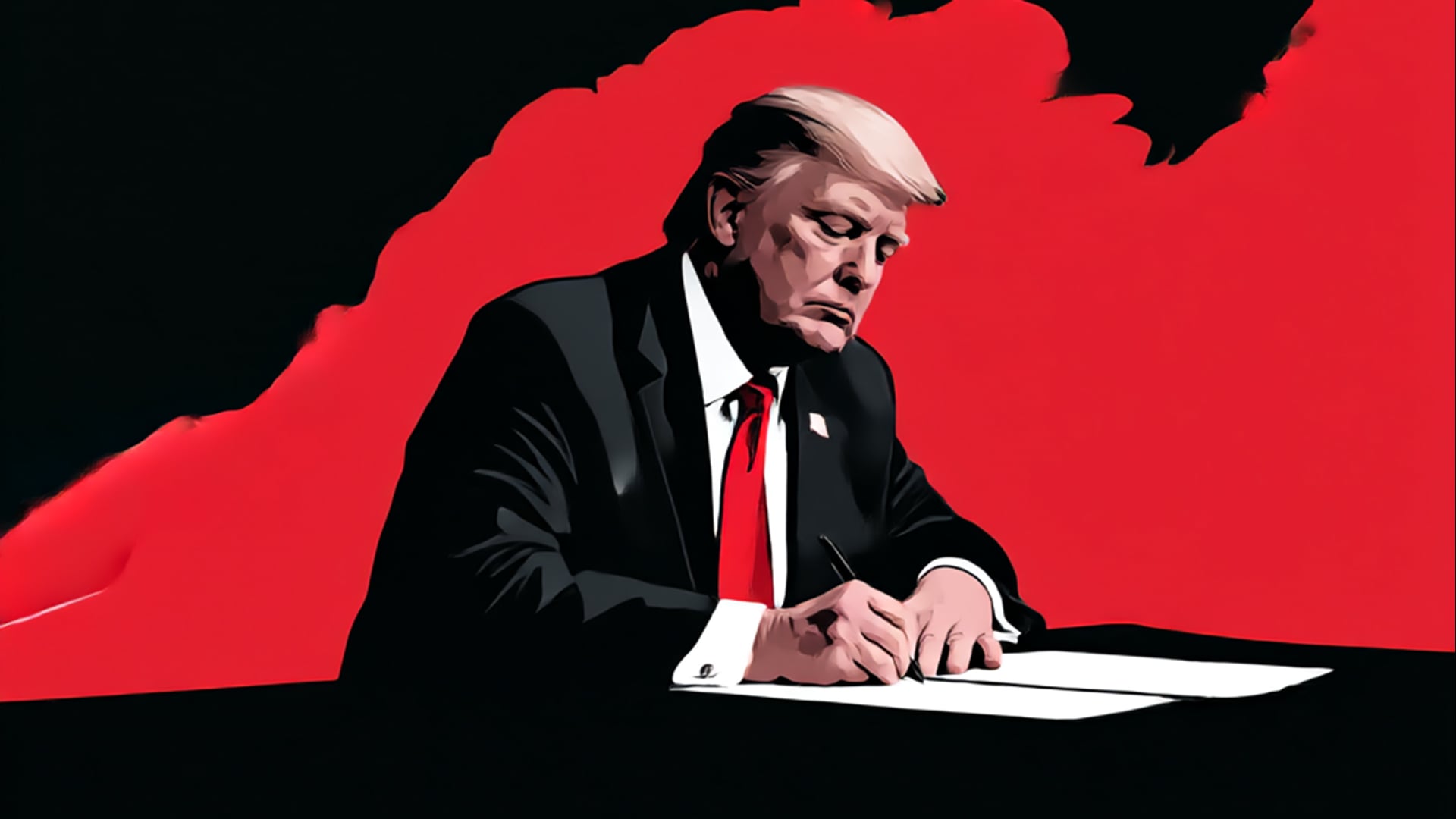
For more than two centuries, the American legal system has rested on a basic premise: lawyers are not held responsible for the conduct of their clients. In this episode of New Law Order—a limited series and podcast co-hosted by Joel Cohen and Yale Law Professor John Morley—that premise is examined. Jeffrey Toobin—legal analyst, author, and longtime observer of the Supreme Court—joins the discussion to analyze the constitutional and professional implications of executive action directed at law firms for the work of individual lawyers.
Executive Power as Retaliation
The discussion examines executive orders affecting firms such as Paul Weiss and Perkins Coie, with consequences including the loss of security clearances, restricted access to federal facilities, and risks to client contracts. These measures were not tied to allegations of illegality, but to perceived political opposition. Toobin outlines why such actions matter constitutionally: government pressure directed at legal representation undermines the independence of the bar. In Toobin’s view, the orders functioned less as regulation and more as a deterrent—reshaping incentives around which clients and causes firms are willing to take on.
Litigation, Accommodation, and Institutional Choice
The conversation traces how different firms responded to the executive orders. Some chose to litigate and ultimately prevailed, reinforcing judicial limits on executive authority. Others opted for negotiated resolutions, including substantial financial settlements, in an effort to mitigate risk and uncertainty. Toobin examines the strategic considerations underlying these divergent paths, including concerns about client confidence, internal firm stability, and exposure to cascading consequences.
He situates these decisions within the broader structure of modern large law firms, where reputational risk and client relationships can create intense pressure to resolve disputes quickly, even when strong legal arguments are available.
Implications for the Adversarial System
Toobin emphasizes that the significance of these events extends beyond the firms involved. When executive actions create disincentives around representation, they risk altering the functioning of the adversarial system itself. The discussion examines how even indirect pressure on legal representation can influence which cases are brought, which clients are served, and how aggressively positions are pursued. Rather than focusing on motive, the analysis centers on effect: how institutional signals from the executive branch can shape behavior across the legal profession.
A Broader Stress Test for Legal Independence
The episode ultimately frames the controversy as a stress test for the legal profession’s structural independence. Toobin reflects on what these events reveal about the resilience of legal norms when they intersect with political power, economic risk, and organizational incentives. For lawyers, firm leaders, and scholars of constitutional law, the conversation offers a careful examination of how institutional safeguards function—and where they may be more fragile than commonly assumed.
Guest
Jeffrey Toobin is a staff writer for The New Yorker, a senior legal analyst for CNN, and the author of several best-selling books, including The Nine and The Oath.
Co-Host
John Morley is a professor at Yale Law School whose scholarship focuses on the business and structure of legal institutions.