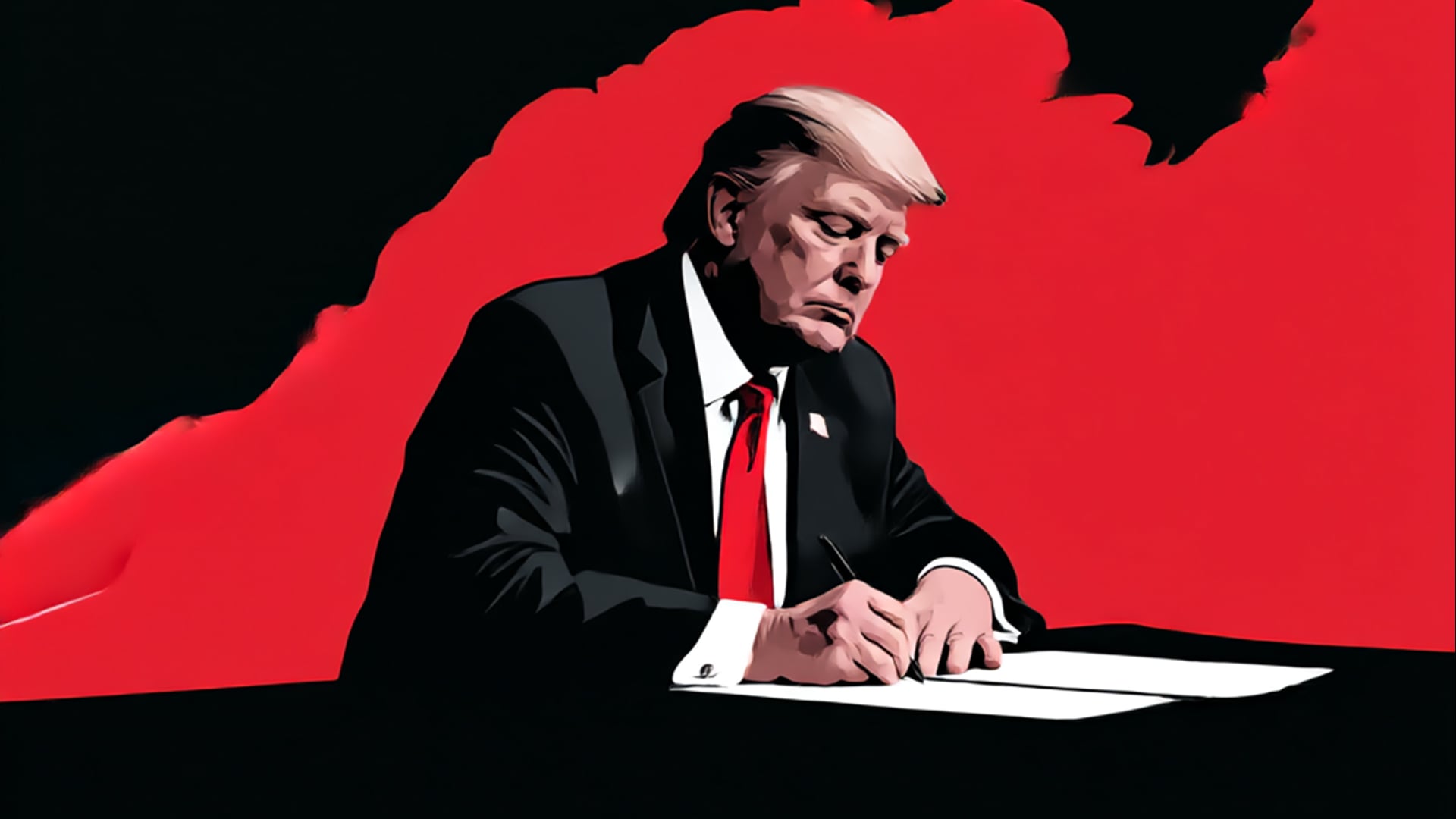
Bending the Knee

An interview with Jeffrey Toobin

(Watch free on Vimeo.)

For more than two centuries, the American legal system has rested on a basic premise: lawyers are not held responsible for the conduct of their clients. In this episode of New Law Order—a limited series and podcast co-hosted by Joel Cohen and Yale Law Professor John Morley—that premise is examined. Jeffrey Toobin—legal analyst, author, and longtime observer of the Supreme Court—joins the discussion to analyze the constitutional and professional implications of executive action directed at law firms for the work of individual lawyers.

Executive Power as Retaliation

The discussion examines executive orders affecting firms such as Paul Weiss and Perkins Coie, with consequences including the loss of security clearances, restricted access to federal facilities, and risks to client contracts. These measures were not tied to allegations of illegality, but to perceived political opposition. Toobin outlines why such actions matter constitutionally: government pressure directed at legal representation undermines the independence of the bar. In Toobin’s view, the orders functioned less as regulation and more as a deterrent—reshaping incentives around which clients and causes firms are willing to take on.

Litigation, Accommodation, and Institutional Choice

The conversation traces how different firms responded to the executive orders. Some chose to litigate and ultimately prevailed, reinforcing judicial limits on executive authority. Others opted for negotiated resolutions, including substantial financial settlements, in an effort to mitigate risk and uncertainty. Toobin examines the strategic considerations underlying these divergent paths, including concerns about client confidence, internal firm stability, and exposure to cascading consequences.

He situates these decisions within the broader structure of modern large law firms, where reputational risk and client relationships can create intense pressure to resolve disputes quickly, even when strong legal arguments are available.

Implications for the Adversarial System

Toobin emphasizes that the significance of these events extends beyond the firms involved. When executive actions create disincentives around representation, they risk altering the functioning of the adversarial system itself. The discussion examines how even indirect pressure on legal representation can influence which cases are brought, which clients are served, and how aggressively positions are pursued. Rather than focusing on motive, the analysis centers on effect: how institutional signals from the executive branch can shape behavior across the legal profession.

A Broader Stress Test for Legal Independence

The episode ultimately frames the controversy as a stress test for the legal profession’s structural independence. Toobin reflects on what these events reveal about the resilience of legal norms when they intersect with political power, economic risk, and organizational incentives. For lawyers, firm leaders, and scholars of constitutional law, the conversation offers a careful examination of how institutional safeguards function—and where they may be more fragile than commonly assumed.


Guest
Jeffrey Toobin is a staff writer for The New Yorker, a senior legal analyst for CNN, and the author of several best-selling books, including The Nine and The Oath.

Co-Host
John Morley is a professor at Yale Law School whose scholarship focuses on the business and structure of legal institutions.

  • Attorney CLE accreditation 

Additional Resources

Executive Orders Targeting Law Firms (Trump Administration)
Read the executive orders – Executive actions issued in 2025 directing federal agencies to restrict security clearances, federal building access, and government contracting involving certain law firms.

Trump Orders, Law Frims on the Line – Yale Law Professor John Morley breaks down a series of 2025 executive directives that single out major law firms with restrictions on clearances, federal access, and government contracts, and explores how those measures can destabilize even the most profitable partnerships.

Why Paul Weiss Struck a Deal With Trump (Wall Street Journal, 2025) – John Morley provides analysis on Paul Weiss’s decision to negotiate the executive order against it.

Trump’s Next Move After Law Firms Surrender (New York Times, 2025) – Jeffrey Toobin examines the potential expansion and resulting risks of executive leverage following law firms’ concessions.

Prof. John J. Donohue III discusses Analyzing Death - Race and Bias in Capital Punishment
Analyzing Death - Race and Bias in Capital Punishment
Prof. John Morley discusses A New Direction for Directed Trusts
A New Direction for Directed Trusts
Christine Mott discusses Animal Cruelty and Domestic Abuse
Animal Cruelty and Domestic Abuse
Prof. Darrell A. H. Miller discusses A Race to the 2nd Amendment
A Race to the 2nd Amendment
Leading ADR Providers discusses Arbitration and Mediation in the Time of COVID
Arbitration and Mediation in the Time of COVID
Ira Kustin discusses A Shift in Funds
A Shift in Funds
Prof. Douglas NeJaime discusses Assisted Reproduction and Parental Rights
Assisted Reproduction and Parental Rights
M. Dru Levasseur discusses A Transition in the Legal Profession
A Transition in the Legal Profession
M. Dru Levasseur discusses A Transition in the Legal Profession (Part 2)
A Transition in the Legal Profession (Part 2)
Matthew F. Herman discusses A Year Like No Other
A Year Like No Other
Prof. Edward Morrison discusses Bankruptcy in the Time of COVID-19
Bankruptcy in the Time of COVID-19
Prof. Lenni Benson discusses Children at the Border
Children at the Border
Alex Zerden discusses Combatting Crypto Money Laundering
Combatting Crypto Money Laundering
Barbara McQuade discusses Confronting the Disinformation Engine
Confronting the Disinformation Engine
Prof. Dorit Reiss discusses COVID-19 Vaccine Mandates
COVID-19 Vaccine Mandates
Lee Rowland discusses Cyberbullying and the First Amendment
Cyberbullying and the First Amendment
Michelle A. Reed discusses Cyber Defense: Private Funds & Banks
Cyber Defense: Private Funds & Banks
Michelle A. Reed discusses Cyber Defense: Private Funds & Banks (Part 2)
Cyber Defense: Private Funds & Banks (Part 2)
Ira Kustin and Sherrese Smith discusses Cyber Risk at Private Funds
Cyber Risk at Private Funds
Prof. John Morley discusses Dangers of the ICO - Investing in Crypto
Dangers of the ICO - Investing in Crypto
Alexia Korberg discusses Dobbs v. Jackson, a Battleground for Abortion Rights
Dobbs v. Jackson, a Battleground for Abortion Rights
Prof. Kate Shaw discusses Donald Trump and the Weight of Presidential Speech
Donald Trump and the Weight of Presidential Speech
James Anderson discusses Driverless Cars—A Shift in Risk
Driverless Cars—A Shift in Risk
Steve Lehto discusses Dud Cars and Lemon Laws
Dud Cars and Lemon Laws
Amy Barasch discusses Empowering Women — Combatting Economic Abuse in a Pandemic
Empowering Women — Combatting Economic Abuse in a Pandemic
Attorney General Sean Reyes discusses Fighting Sex Trafficking - A New Approach
Fighting Sex Trafficking - A New Approach
Attorney General Sean Reyes discusses Fighting Sex Trafficking - A New Approach (Part 2)
Fighting Sex Trafficking - A New Approach (Part 2)
Prof. Nadine Strossen discusses Free Speech in a Social Media World
Free Speech in a Social Media World
Prof. Nadine Strossen discusses Free Speech vs Hate Speech on Campus
Free Speech vs Hate Speech on Campus
Prof. Richard Briffault discusses From Super PACs to Dark Money
From Super PACs to Dark Money
Prof. Richard Briffault discusses From Super PACs to Dark Money (Part 2)
From Super PACs to Dark Money (Part 2)
Desireé Busching & Ira Kustin discusses Fund Owner Departures + Upper Tier Arrangements
Fund Owner Departures + Upper Tier Arrangements
Prof. Samuel Issacharoff discusses Gerrymandering: The Art of Redrawing Elections
Gerrymandering: The Art of Redrawing Elections
Prof. Sarah Barringer Gorden discusses God & Football after Bremerton
God & Football after Bremerton
Prof. Jeffrey Rosen discusses Government Surveillance: Privacy & Technology
Government Surveillance: Privacy & Technology
Prof. Joseph Blocher discusses Gun Rights under Rahimi & Cargill
Gun Rights under Rahimi & Cargill
Lee Rowland discusses Hate Speech in America
Hate Speech in America
Lee Rowland discusses Hate Speech in America (Part 2)
Hate Speech in America (Part 2)
Evon Idahosa discusses Human Trafficking Fueling Modern Day Slavery
Human Trafficking Fueling Modern Day Slavery
Susanna Saul and Diane Feniello discusses In Defense of Abused Women (Part 2)
In Defense of Abused Women (Part 2)
Prof. Susan N. Herman discusses Individual Liberty in Post-9/11 America
Individual Liberty in Post-9/11 America
Prof. Michael Graetz discusses Infrastructure and Employment
Infrastructure and Employment
Prof. Stephen Vladeck discusses Inside the Shadow Docket
Inside the Shadow Docket
David N. Feldman discusses Investing in Green—Funding the Marijuana Industry
Investing in Green—Funding the Marijuana Industry
David N. Feldman discusses Investing in Green—Funding the Marijuana Industry (Part 2)
Investing in Green—Funding the Marijuana Industry (Part 2)
Phillip Miller discusses Jailhouse Law—Lawyering as an Inmate
Jailhouse Law—Lawyering as an Inmate
Phillip Miller discusses Jailhouse Law—Lawyering from Inside Prison
Jailhouse Law—Lawyering from Inside Prison
Prof. Richard H. Fallon, Jr. discusses Justice Forever – Life Tenure
Justice Forever – Life Tenure
Prof. Richard H. Fallon, Jr. discusses Justice Forever – Life Tenure  (Part 2)
Justice Forever – Life Tenure (Part 2)
Columbia Law School Faculty discusses Law in the Time of COVID-19
Law in the Time of COVID-19
Prof. Anthony Sebok discusses Legal Innovation – Investing in Lawsuits
Legal Innovation – Investing in Lawsuits
Prof. Anthony Sebok discusses Legal Innovation – Investing in Lawsuits (Part 2)
Legal Innovation – Investing in Lawsuits (Part 2)
Judge Andrew Napolitano discusses Mass Quarantines in the COVID-19 Crisis
Mass Quarantines in the COVID-19 Crisis
Prof. John J. Donohue III discusses Mass Shootings and Gun Laws
Mass Shootings and Gun Laws
Prof. John J. Donohue III discusses Mass Shootings and Gun Laws (Part 2)
Mass Shootings and Gun Laws (Part 2)
Prof. Emily Murphy discusses Memory Evidence (Part 2)
Memory Evidence (Part 2)
Hina Shamsi discusses Military Drones and Targeted Killing
Military Drones and Targeted Killing
john a. powell discusses Modern Discrimination, Race & Inequality
Modern Discrimination, Race & Inequality
Prof. John Morley discusses Mutual Funds Structure and Risk
Mutual Funds Structure and Risk
Prof. Rachel Harmon discusses Police Commands & Police Coercion
Police Commands & Police Coercion
Prof. Daniel Capra discusses Police Power and Personal Rights
Police Power and Personal Rights
Prof. Daniel Capra discusses Police Power and Personal Rights (Part 2)
Police Power and Personal Rights (Part 2)
Prof. Rachel Harmon discusses Policing the Police (Part 2)
Policing the Police (Part 2)
M. Chris Fabricant discusses Poor People Science & Wrongful Convictions
Poor People Science & Wrongful Convictions
Aimen Mir and Colin Costello discusses Powers of the Modern CFIUS
Powers of the Modern CFIUS
Prof. Joel Reidenberg discusses Privacy & Technology in Today's Schools
Privacy & Technology in Today's Schools
Prof. Jeffrey Rosen discusses Privacy vs. Government Tech
Privacy vs. Government Tech
M. Chris Fabricant discusses Pseudoscience and Dubious Forensics
Pseudoscience and Dubious Forensics
M. Chris Fabricant discusses Pseudoscience and Dubious Forensics (Part 2)
Pseudoscience and Dubious Forensics (Part 2)
Alicia Bannon discusses Recusal & the Bounds of Judicial Bias
Recusal & the Bounds of Judicial Bias
Professor Jody Madeira discusses Red Flag Laws & Domestic Violence Orders
Red Flag Laws & Domestic Violence Orders
Chairman Christopher Giancarlo discusses Regulating Cryptocurrency after FTX
Regulating Cryptocurrency after FTX
Annette Nazareth discusses Regulating Finance: Dodd Frank Decoded
Regulating Finance: Dodd Frank Decoded
Prof. John J. Donohue III discusses Regulating Guns: Smart Laws & Dumb Laws
Regulating Guns: Smart Laws & Dumb Laws
Prof. John J. Donohue III discusses Regulating Guns: Smart Laws & Dumb Laws (Part 2)
Regulating Guns: Smart Laws & Dumb Laws (Part 2)
Leading ADR Providers discusses Remote Arbitration in a Pandemic
Remote Arbitration in a Pandemic
Leading ADR Providers discusses Remote Arbitration in a Pandemic
Remote Arbitration in a Pandemic
Leading ADR Providers discusses Remote Arbitration in a Pandemic (Part 2)
Remote Arbitration in a Pandemic (Part 2)
Judge Andrew Napolitano discusses Replacing Scalia - Filling a Vacancy on the Supreme Court
Replacing Scalia - Filling a Vacancy on the Supreme Court
Judge Andrew Napolitano discusses SCOTUS 2016 - A Year without a Justice
SCOTUS 2016 - A Year without a Justice
Prof. Kimberly Ferzan discusses Self Defense and the Use of Deadly Force
Self Defense and the Use of Deadly Force
Profs Adam Cox and Cristina Rodriguez discusses Shadow Immigration and the Power of the Presidency
Shadow Immigration and the Power of the Presidency
Profs Adam Cox and Cristina Rodriguez discusses Shadow Immigration and the Power of the Presidency (Part 2)
Shadow Immigration and the Power of the Presidency (Part 2)
Judge Andrew Napolitano discusses State-Sanctioned Targeted Killing
State-Sanctioned Targeted Killing
Daniel Solove discusses The AI Threat to Privacy
The AI Threat to Privacy
Robin Steinberg discusses The Case for Holistic Defense
The Case for Holistic Defense
Jeena Shah discusses The Case of Scott Lively: Gay Persecution in Uganda
The Case of Scott Lively: Gay Persecution in Uganda
Prof. Dorit Reiss discusses The COVID-19 Vaccine and the Role of the State
The COVID-19 Vaccine and the Role of the State
Prof. Eric Goldman discusses The Law of Deplatforming
The Law of Deplatforming
Joel Cohen discusses The Leaked Opinion, Dobbs v. Jackson
The Leaked Opinion, Dobbs v. Jackson
David Sheehan discusses The Madoff Fraud: Unwinding a Ponzi Empire
The Madoff Fraud: Unwinding a Ponzi Empire
David Sheehan discusses The Madoff Fraud: Unwinding a Ponzi Empire (Part 2)
The Madoff Fraud: Unwinding a Ponzi Empire (Part 2)
Kenneth Feinberg discusses The Price of Death - Compensating Victims
The Price of Death - Compensating Victims
Robin Steinberg discusses The Problem with Bail
The Problem with Bail
Seymour James discusses The Right to an Attorney - Currently Under Threat
The Right to an Attorney - Currently Under Threat
Prof. Richard Pildes discusses The Shifting Power of Political Parties
The Shifting Power of Political Parties
Prof. Richard Pildes discusses The Shifting Power of Political Parties (Part 2)
The Shifting Power of Political Parties (Part 2)
Prof. John Morley discusses The Weapons of a Hostile Takeover
The Weapons of a Hostile Takeover
Prof. Michael Graetz discusses The Wolf at the Door: Addressing Unemployment in Pandemic America
The Wolf at the Door: Addressing Unemployment in Pandemic America
Mara Keisling discusses Transgender Battles - Access and Equality
Transgender Battles - Access and Equality
Mara Keisling discusses Transgender Battles - Access and Equality (Part 2)
Transgender Battles - Access and Equality (Part 2)
Prof. John Morley discusses Trump Orders: Law Firms on the Line
Trump Orders: Law Firms on the Line
Prof. Theodore M. Shaw discusses Understanding SFFA v. Harvard
Understanding SFFA v. Harvard
Steve Lehto discusses Used Car Battles
Used Car Battles
Prof. Dorit Reiss discusses Vaccine Mandates for Children
Vaccine Mandates for Children
Columbia Law School Faculty discusses Vulnerable Populations in a Pandemic
Vulnerable Populations in a Pandemic
Prof. John Morley discusses When Law Firms Collapse
When Law Firms Collapse
Prof. Marci Hamilton discusses When Religious Freedom Harms Children
When Religious Freedom Harms Children
Prof. Marci Hamilton discusses When Religious Freedom Harms Children (Part 2)
When Religious Freedom Harms Children (Part 2)
Prof. James Cox discusses Who's Liable After GameStop: A Law Professor's Take
Who's Liable After GameStop: A Law Professor's Take
Kenneth Breen and Phara Guberman discusses Who's Liable After GameStop: Litigators' Take
Who's Liable After GameStop: Litigators' Take
Prof. Lisa Heinzerling discusses WV v. EPA and the Major Questions Doctrine
WV v. EPA and the Major Questions Doctrine