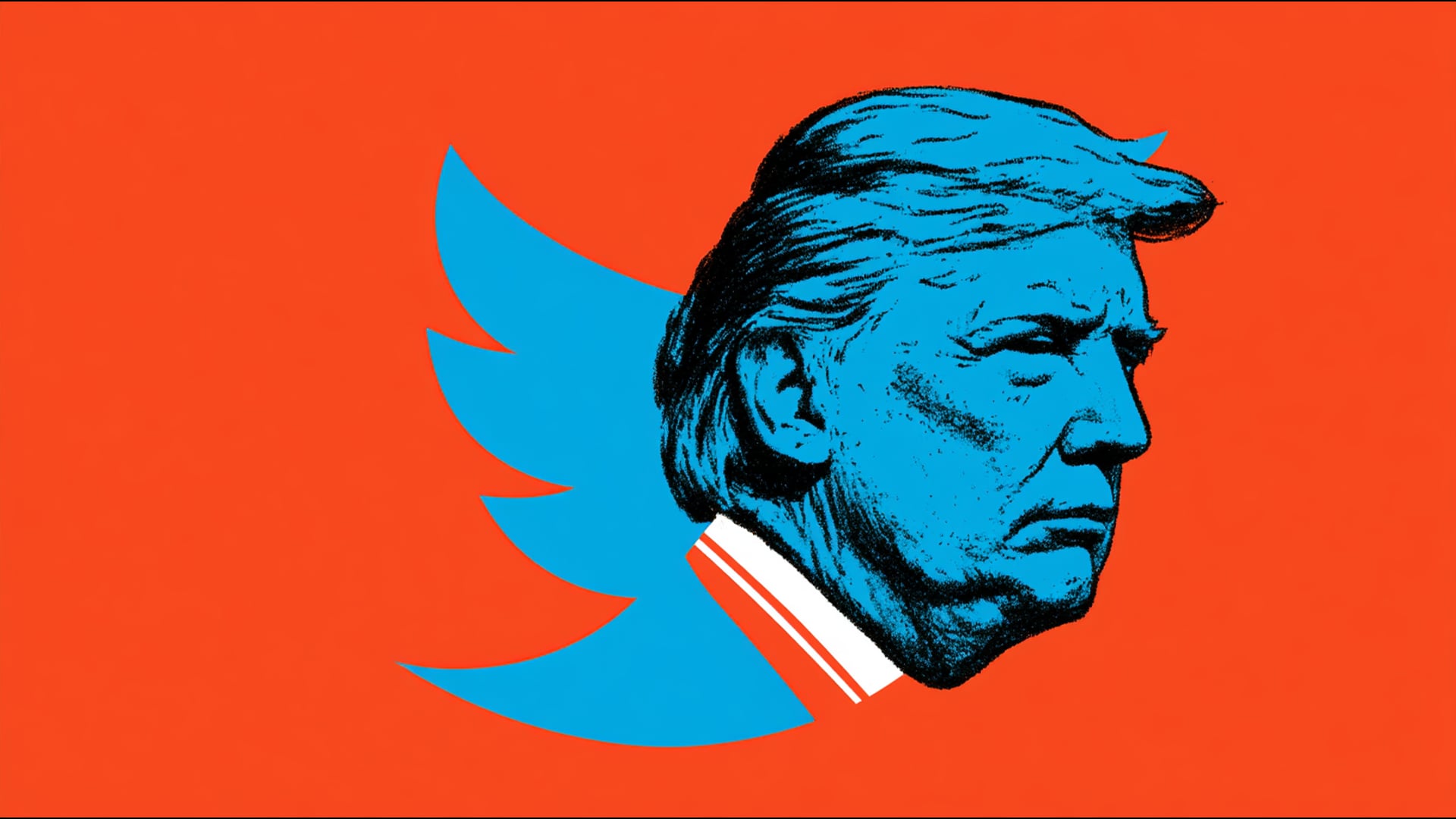
Other presidents used Twitter to announce initiatives and mark occasions. Donald Trump used it to announce policy, attack opponents, pressure Congress, and answer questions that his own press office would not. He called it "modern day presidential." That raised a new set of legal questions. Is a presidential tweet an official statement, a campaign-style aside, or something in between? Can a court rely on it? Can the President block his critics? And does the government have to keep every tweet?
In this TalksOnLaw interview, Joel Cohen sits down with Kate Shaw, now a professor at the University of Pennsylvania Carey Law School and a former lawyer in the Obama White House Counsel's Office and a leading scholar of presidential speech, to work through those questions. Her companion interview, Donald Trump and the Weight of Presidential Speech, looks more broadly at how courts treat what presidents say.
A New Kind of Presidential Communication
Shaw explains that President Obama's account was run mainly by staff, and the rare tweets he wrote himself were signed "-BO." President Trump wrote his own tweets and used them to threaten, insult, and pressure Congress and political opponents. That had never been done before. Shaw sees a real innovation in it: presidents have always adapted to new technology, and Trump himself acknowledged that his use of Twitter broke with tradition.
The Travel Ban and the "Clean Break" Argument
The first test came in litigation over the executive orders restricting entry from several predominantly Muslim countries. Challengers relied on the President's campaign call for a "Muslim ban." The Justice Department answered with a "clean break" argument: whatever a candidate said, the President who took the oath of office, and the orders drafted by executive agencies, should be judged on their own terms. Shaw explains how the President's tweets undercut that position. After a terror attack in Europe, he tweeted "TRAVEL BAN" in capital letters, even though his lawyers and press secretary had insisted it was only a "temporary pause." He also said the Justice Department should have stuck with the original order rather than the "watered down" version.
Official Statement or Campaign Speech?
Nobody yet knew how seriously to take a presidential tweet, Shaw says. Not the courts, not the public, and perhaps not the White House. She gives a striking example of the White House itself treating tweets as official. After firing FBI Director James Comey, the President suggested on Twitter that there might be "tapes" of their conversations. When the House Intelligence Committee formally asked about them, the White House Office of Legislative Affairs responded on official letterhead by quoting the President's tweet. Other tweets, such as a video showing the President wrestling a figure with CNN's logo, carry no legal message. Critics still said they fed hostility toward the press.
Tweets as Evidence
Shaw separates two questions. The first is how courts should use presidential tweets to interpret government action, such as an executive order, or to judge whether it is constitutional. There, she argues, the principles courts have developed for rally speeches and interviews should carry over. The second is the President's own potential liability. There, tweets are evidence like any other person's statements. She explains how tweets and interviews about Comey's firing, including the President's acknowledgment to NBC's Lester Holt that Russia was on his mind when he fired Comey, could matter to investigators and in any impeachment. They also conflicted with the Deputy Attorney General's memo, which rested the firing on Comey's handling of the Clinton email investigation.
Blocking Critics: Is Twitter a Public Forum?
A newly filed First Amendment lawsuit challenged the President's blocking of critics from his account. The theory is that the reply threads under his tweets are a public forum. Excluding people because of their viewpoint is something the government could not do to a speaker in a town square. Blocking also paints a skewed picture of public opinion by removing critics from the conversation. Shaw sets out the counterarguments as well: Twitter is a private company, the President has many other channels, and politicians have long kept protesters out of their events.
Two Accounts, One Set of Records
The President had both the official @POTUS account and his personal @realDonaldTrump account. Shaw sees no good legal argument that they differ for record-keeping purposes. Under the Presidential Records Act, records a president creates in office belong to the public. They pass to the National Archives when the term ends and become subject to public request under the Freedom of Information Act five years after the president leaves office, though a president may restrict some categories for up to 12 years. In her view, messages sent to tens of millions of people are plainly presidential records, and so may be retweets, likes, and even the list of blocked accounts. Even the notorious "covfefe" tweet should be kept, she argues, because doubts about the Act's scope should be resolved in favor of preservation.
What to Know Now
Courts have since answered several of the questions Shaw raised, not always in the direction challengers hoped. In Trump v. Hawaii (2018), the Supreme Court upheld the third version of the travel ban 5–4. The majority considered the President's statements, including his tweets, but applied a deferential standard of review in the national security and immigration context and found the proclamation justified on its face. The dissenters argued that the statements revealed anti-Muslim animus. Presidential words still come up in litigation, but Hawaii sets a high bar for relying on them to invalidate facially neutral action in immigration and foreign affairs.
The blocking case, Knight First Amendment Institute v. Trump, went in the challengers' favor. The Second Circuit held that the interactive space of @realDonaldTrump was a public forum and that blocking critics was unconstitutional viewpoint discrimination. After the President left office, the Supreme Court vacated the ruling as moot. Twitter had already suspended the account after January 6, 2021, and it was restored under new ownership in 2022. In Lindke v. Freed (2024), the Court set the governing test for officials' social media accounts: an official's posts count as state action only when the official has actual authority to speak for the government on the matter and purports to use it.
Tweets also became central evidence, as Shaw anticipated. The Special Counsel's report analyzed the President's public statements about Comey and the investigation, but the Office of Legal Counsel's position against indicting a sitting president shaped how the report treated them. The President was later impeached twice and acquitted both times, the second time largely over his speech and posts around January 6. In Trump v. United States (2024), the Supreme Court recognized broad immunity for official acts and indicated that many of a president's public communications may fall within that protection. Supporters see that as protecting the office, while critics warn it makes presidential words harder to reach. The Presidential Records Act was also tested after the first term ended, through disputes over White House records that were not transferred to the National Archives, and again in 2026, when the Justice Department's Office of Legal Counsel called the Act unconstitutional and a federal court ordered the White House to keep complying while the government appealed. Presidential posts today span several platforms, including Truth Social.