Law Combatting Wildfires
An interview with Prof. Stephen R. Miller
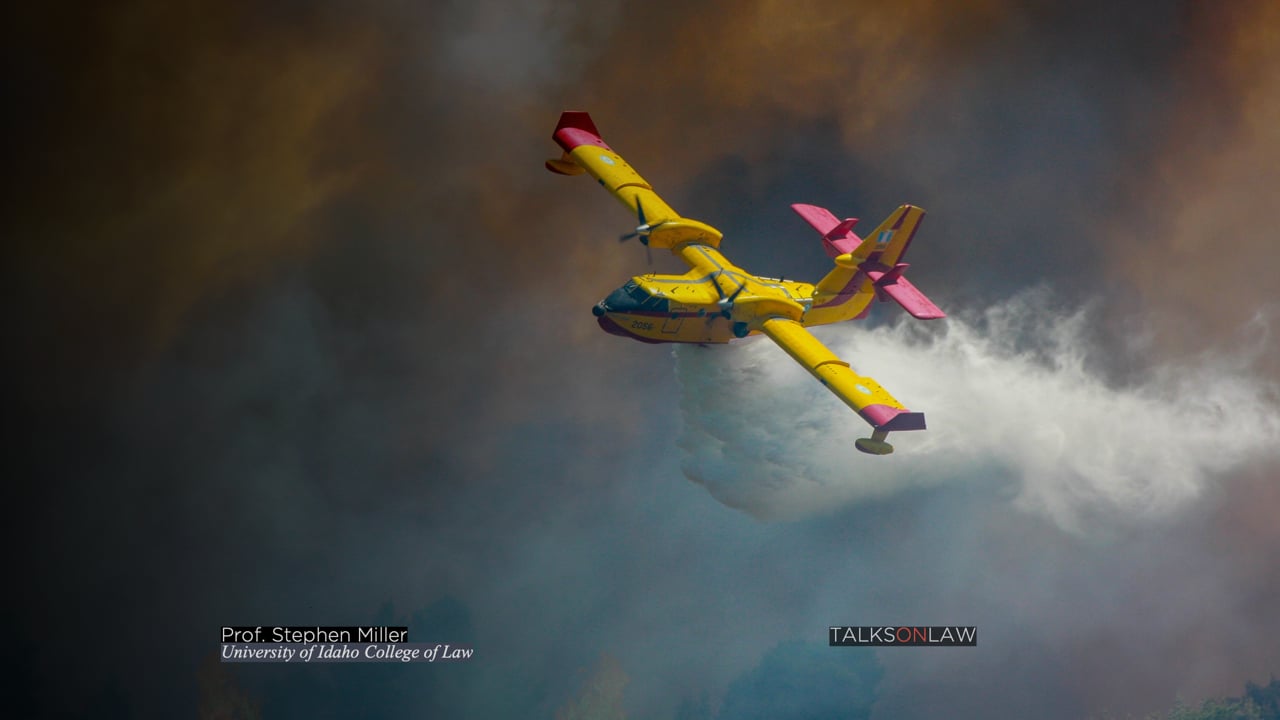
The western United States is now experiencing four times more wildfires than ever before. In recent years, wildfires have become larger and more frequent, threatening lives and devastating local communities. A century of wildland fire management policy, climate change, and land development patterns in the West have created a perfect storm of a wildfire crisis. Professor Stephen R. Miller examines the factors proliferating wildfires and complicating effective wildland fire management, including the regulatory structure and the patchwork of federal, state, local, and tribal agencies responsible for fire planning and response.
About Prof. Stephen R. Miller
“There is no silver bullet [to the wildfire crisis]. … The best way for people to contextualize it from the legal side or the policy side is to think about it as risk allocation.”
Stephen R. Miller is Professor of Law at the University of Idaho College of Law in Boise where he teaches courses on property, land use, state and local government law, and real estate. His numerous books, chapters, law review articles and editorials have been published by Cambridge University Press, the Harvard Environmental Law Review and the Harvard Journal on Legislation, among others. He is the co-author of a leading casebook, Land Use and Sustainable Development Law, and co-editor of a collection of essays on climate change. He is the editor-in-chief of the ABA Journal of Affordable Housing & Community Development Law. He maintains a wide scope of community involvement at the local level and beyond. He has served as a consultant on United States’ land use governance for the Organisation for Economic Cooperation and Development (OECD) in Paris and advised on local land use governance in Cambodia. He has also served as a commissioner on the Boise Planning & Zoning Commission and helped launch the Citizens Planning Academy. He is a member of the American Institute of Certified Planners and serves on the American Planning Association’s Amicus Curiae Committee. He has also received research grants from the U.S. Forest Service, the Idaho Department of Lands, the Center for Advanced Energy Studies, and a sub-grant from the U.S. Bureau of Land Management.