The steak arrives in shrink-wrap and the chicken in a foam tray, and the singing cows in the commercials do the rest. What actually happens to the nine billion animals slaughtered in the United States each year, who is watching, and why do the states that want to do something about it keep being told they cannot?
In this TalksOnLaw interview, Joel Cohen sits down with Christine Mott, former chair of the New York City Bar's Animal Law Committee, for a tour of farmed-animal law that runs from Upton Sinclair to the Supreme Court — and finds that between the farm and the slaughterhouse gate, almost no law applies at all.
Chino
Mott opens with the 2008 Hallmark/Westland case in Chino, California: a slaughterhouse that was the second-largest beef supplier to the National School Lunch Program, where Humane Society investigators filmed spent dairy cows too sick to stand being dragged with chains, rammed with forklifts, and stabbed in the eyes to get them to the kill floor — under a federal rule that condemned any non-ambulatory adult cow, and in the presence of USDA inspectors who were there every day. She explains the three fates of an animal at the gate (passed, suspect, condemned), why the incentive to make a downed cow stand is overwhelming, and why inspectors who "bless" a pen of a thousand animals cannot see what an undercover camera can. The USDA's only real power, she notes, is to stop the line; monetary penalties exist only for downed-animal violations.
A Century of Federal Law
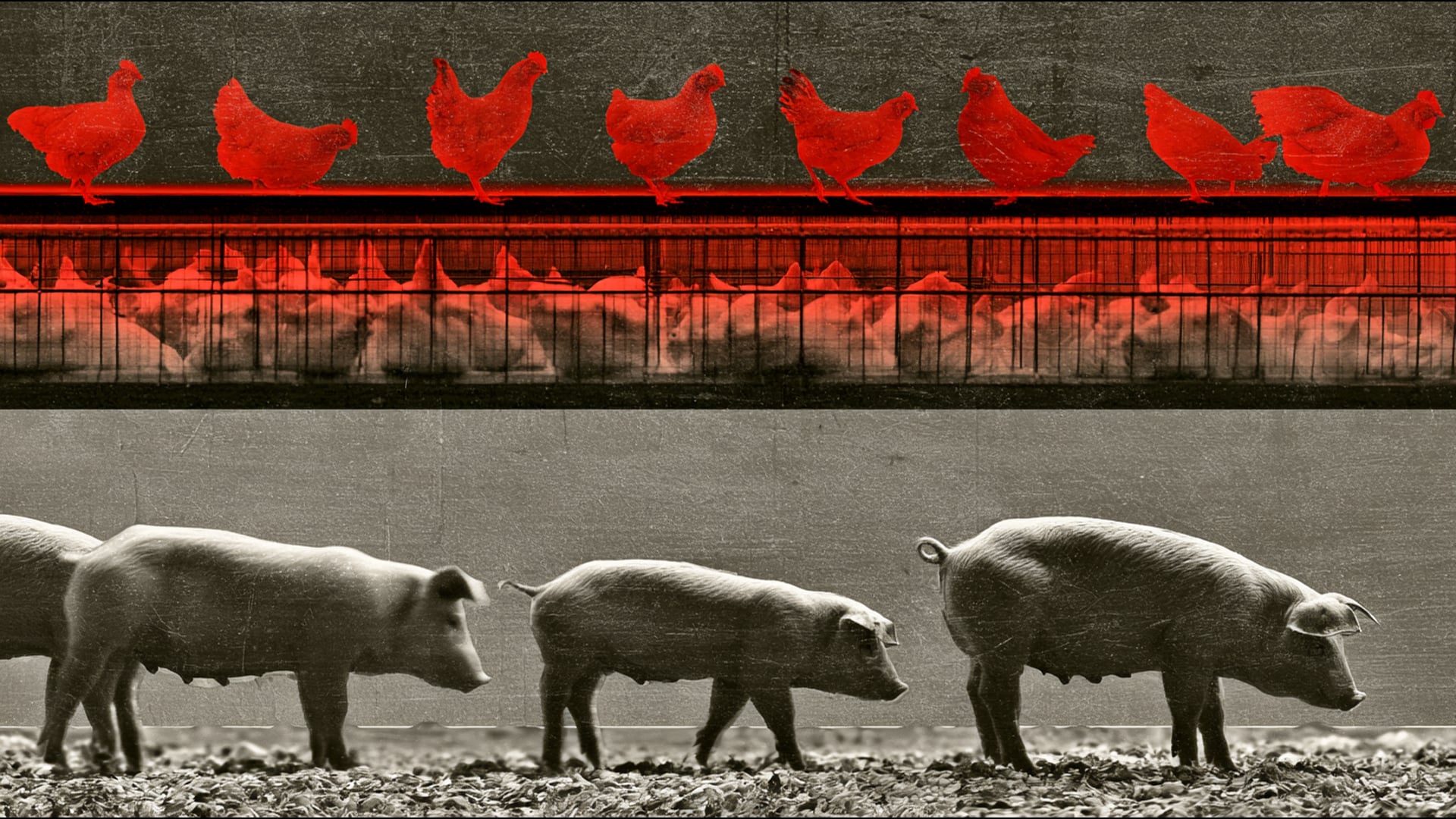
The Federal Meat Inspection Act of 1906 was a consumer-protection response to The Jungle; the Humane Methods of Slaughter Act of 1958 added the requirement that animals be rendered insensible before slaughter, a rule Mott says is still violated every year in documented cases. Neither statute covers poultry, which the USDA has never designated as livestock, so chickens and turkeys — the overwhelming majority of animals slaughtered — have no federal humane-handling protection at all. And no federal law reaches the farm itself: gestation crates in which sows cannot turn around, battery cages allotting each hen less than a sheet of paper, beak-cutting and castration without anesthesia. State cruelty laws nominally apply but exempt "customary" practices, so the only farm prosecutions Mott has seen involve workers kicking turkeys like soccer balls before Thanksgiving.
Harris and the Preemption Wall
After Chino, California banned the slaughter of any downed animal. The National Meat Association sued, and in National Meat Association v. Harris (2012) a unanimous Supreme Court held the law preempted by the FMIA's clause barring state requirements "in addition to or different than" federal ones: from the moment the truck reaches the slaughterhouse gate, the states have no say. Mott's response is that the states must therefore act before the gate — as California did with Proposition 2, banning crates and cages on the farm — and that Congress should amend the preemption clause to let states regulate consistently with federal law. She confronts the cost objection directly: meat should probably be more expensive, and consumers who would pay for humane treatment are instead being sold undefined labels like "humanely raised."
Ag-Gag and the Fox in the Henhouse
The conversation closes on the industry's response to undercover investigations — "ag-gag" laws criminalizing photography or employment under false pretenses at agricultural facilities, including a New York proposal that would have made it a crime to photograph a livestock truck from a public highway — and Mott's view that they raise obvious First Amendment problems. She indicts the USDA's dual mandate to promote and police agriculture, the coziness of inspectors assigned to a single plant for years, and the arithmetic: 158 humane-handling employees for more than 6,000 facilities. Her prescriptions are to fix preemption, move enforcement to an agency without a conflict, and follow Israel's example of cameras in every slaughterhouse.
What to Know Now
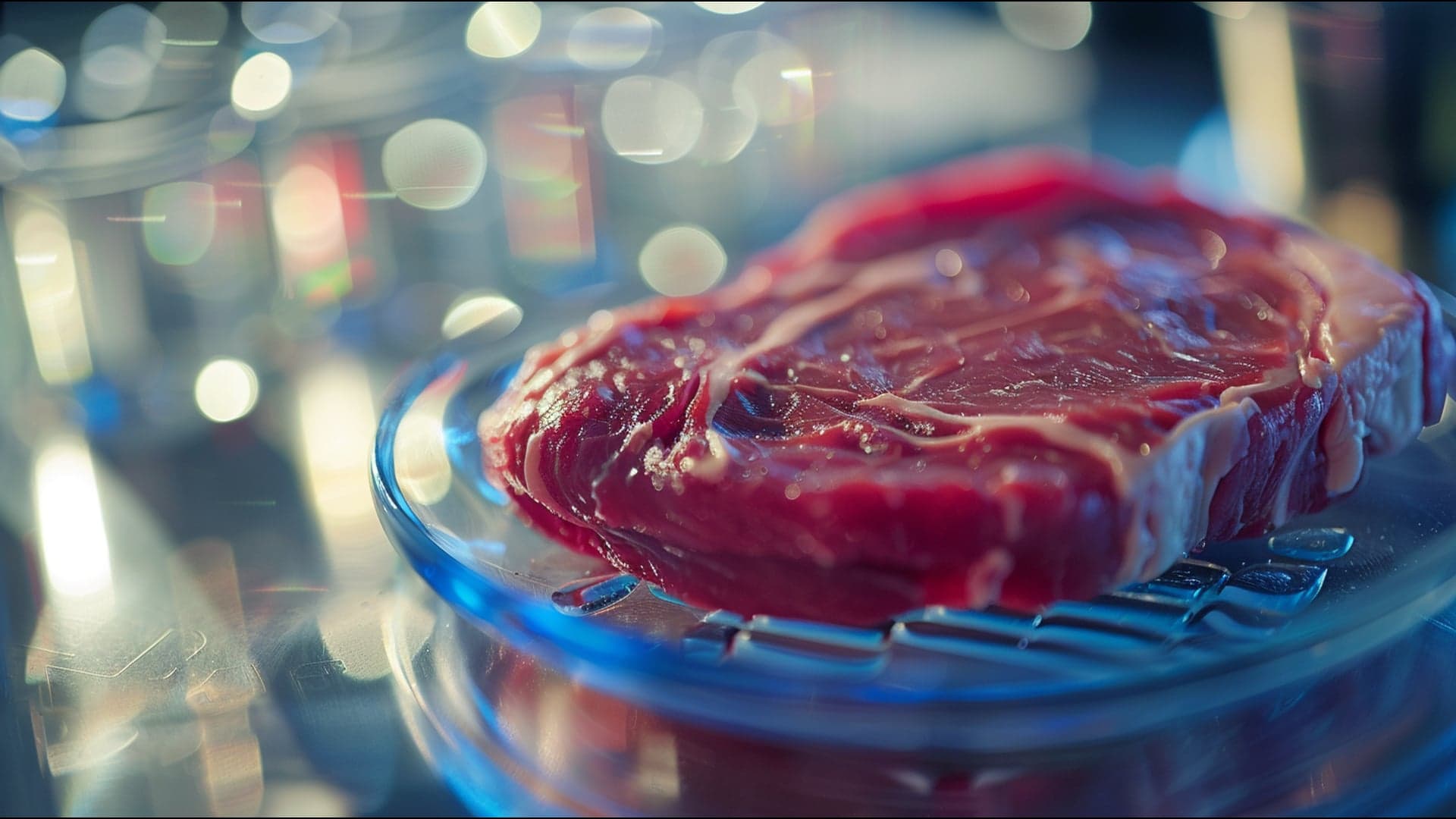
The path Mott charts — regulate before the gate, and fight for the right to see — has largely been vindicated. While Harris still keeps states out of the slaughterhouse itself, they are far from powerless on the farm and at the market. California voters went further in 2018 with Proposition 12, which not only bans gestation crates, battery cages, and veal crates in the state but prohibits the sale of pork, eggs, and veal from animals confined that way anywhere; the pork industry challenged it under the dormant Commerce Clause, and in National Pork Producers Council v. Ross (2023) the Supreme Court upheld the law, confirming that states may condition access to their markets on how animals are raised, with Massachusetts's Question 3 following. Industry-backed bills to override such laws federally, including the EATS Act, have not passed. Ag-gag statutes have fared badly in court: federal courts struck down Idaho's law in 2018, Utah's in 2017, and Kansas's in 2021, and in North Carolina, where a challenge was pending when this conversation was recorded, the Fourth Circuit in 2023 held the state's Property Protection Act unconstitutional as applied to undercover newsgathering, and the Supreme Court declined to review it; Iowa's serial attempts have produced mixed results. Federal humane-handling law is unchanged and poultry remains uncovered, but the FDA in 2017 ended the use of medically important antibiotics for growth promotion, requiring veterinary oversight, and since 2023 every remaining over-the-counter use of those drugs in livestock has required a veterinarian's prescription. The USDA's humane-handling capacity has not materially grown, and undercover investigations remain the principal source of enforcement. The most striking development is one the conversation could not foresee: in 2023 the USDA and FDA approved the first cultivated (cell-grown) chicken for sale in the United States, and Florida and Alabama responded in 2024 by banning it — a new front in the fight over what the law will let people know and choose, and the field in which Mott now works.