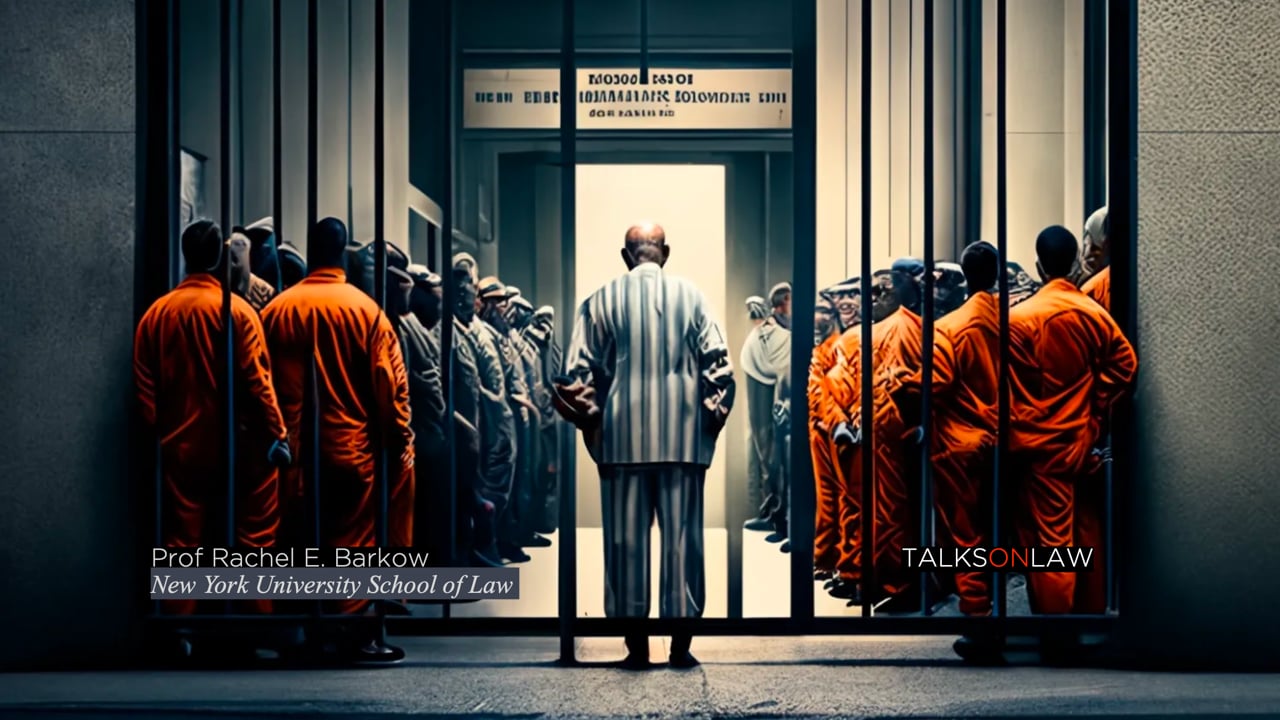
Confronting Mass Incarceration (Part 2)
An interview with Prof. Rachel Barkow
PODCAST STYLE 🎧
With the world’s largest prison population and recidivism rates above 75%, our prisons are full but ineffective. In part two of our interview with Professor Rachel Barkow of NYU Law, we explore the potential for reform. Barkow first looks at some promising trends across the country from decriminalizations to reductions in mandatory sentencing. Later, Barkow offers evidence-based suggestions for broader reforms that could help to reverse the nation's failed experiment with mass incarceration.
Watch Part 1 of Confronting Mass Incarceration.
About Prof. Rachel Barkow
“When you see a response to criminal activity in the United States, issues of racial bias are never far behind.”
Rachel Barkow is the vice dean and Segal Family Professor of Regulatory Law and Policy and the Director of the Center on the Administration of Criminal Law at NYU Law. Barkow is a leading expert in criminal, administrative, and constitutional law. Prior to joining the faculty at NYU, Barkow was an attorney at Kellogg, Huber, Hansen, & Figel in Washington D.C. Barkow is also a former law clerk to Judge Laurence H. Silberman of the D.C. Circuit and Justice Antonin Scalia of the U.S. Supreme Court. In 2013, she was confirmed by the Senate as a member of the U.S. Sentencing Commission. She is an active member of the Manhattan District Attorney’s Office Conviction Integrity Policy Advisory Panel since 2010. She co-founded a clemency resource center at NYU Law that achieved sentencing commutations for 96 incarcerated people.
Barkow’s scholarship focuses on the application of administrative and constitutional law theory to the administration of criminal justice. Her latest book, published in 2019, is Prisoners of Politics: Breaking the Cycle of Mass Incarceration on the political dynamics of mass incarceration and how administrative law can be used to fix it.