Race, Police, and Imperfect Justice
An interview with Race, Police, and Imperfect Justice Panel
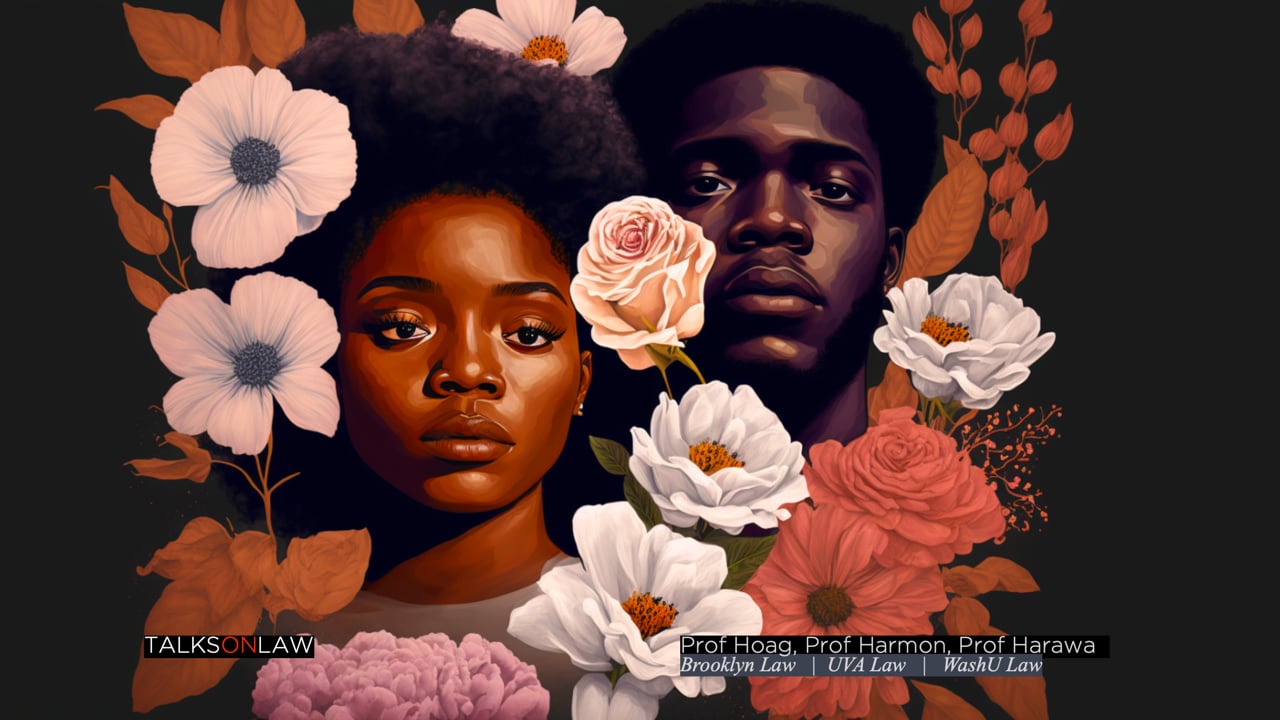
Controversial cases of police shootings and high profile killings have forced us to grapple with questions of appropriate police response, officer accountability, prosecutorial discretion, and that seem to encourage the use of deadly force. These same public cases further underscored how these issues disproportionately affect Black Americans and other people of color. In this conversation, criminal law scholars Alexis Hoag of Brooklyn Law, Rachel Harmon of UVA Law, and Daniel Harawa of WashU Law explore the high-profile cases at the intersection of race and policing, including the legal proceedings and trials for the deaths of George Floyd, Breonna Taylor, and Ahmaud Arbery. They discuss what went wrong, what has improved, and what remains to be fixed in our imperfect justice system.
Watch Part 2 of Race, Police, and Imperfect Justice.
About Race, Police, and Imperfect Justice Panel
“The fact that these conversations [on race and policing] are happening on a mass scale… I hope that it leads to positive changes in how police interact with citizens. [Daniel Harawa]”
Alexis Hoag
Alexis Hoag is a professor at Brooklyn Law School. She teaches and writes in criminal law and procedure, evidence, and carceral abolition. Her recent scholarship examines the ways in which policies, doctrines, and practices within the criminal legal system erode people’s constitutional rights and perpetuate racial subordination. She serves on the editorial board of the Amicus Journal and co-chairs the capital punishment committee of the New York City Bar Association. Prior to academia, Professor Hoag spent more than a decade as a civil rights and criminal defense lawyer with the NAACP Legal Defense and Educational Fund and the Office of the Federal Public Defender.
Rachel Harmon
Rachel Harmon is a professor at the University of Virginia School of Law. She teaches and writes in criminal law and procedure, policing, and civil rights. Her casebook, The Law of the Police (2021), is the first resource for students and others seeking to understand and evaluate how American law governs police interactions with the public. She also serves as the faculty director of the Center for Criminal Justice at UVA Law. She is a member of the American Law Institute and serves as an associate reporter for ALI’s project on Principles of the Law of Policing. Prior to academia, Professor Harmon was a federal prosecutor in the U.S. Department of Justice’s Civil Rights Division and the U.S. Attorney’s Office for the Eastern District of Virginia.
Daniel Harawa
Daniel Harawa is a professor at Washington University in St. Louis School of Law. He teaches in criminal law and evidence. He also directs the appellate clinic, which handles criminal, civil rights, and habeas cases before federal courts of appeals across the country. His research focuses on the ways in which race intersects with criminal law and procedure. He is interested in how doctrines and institutional practices perpetuate a racial hierarchy within the criminal legal system. Professor Harawa currently works with the NAACP Legal Defense and Education Fund (LDF) in an of counsel capacity. He previously worked at LDF as Assistant Counsel and as a Staff Attorney at the Public Defender Service for the District of Columbia.