The Criminal's Brain - Neuroscience in the Courtroom
An interview with Prof. Deborah Denno
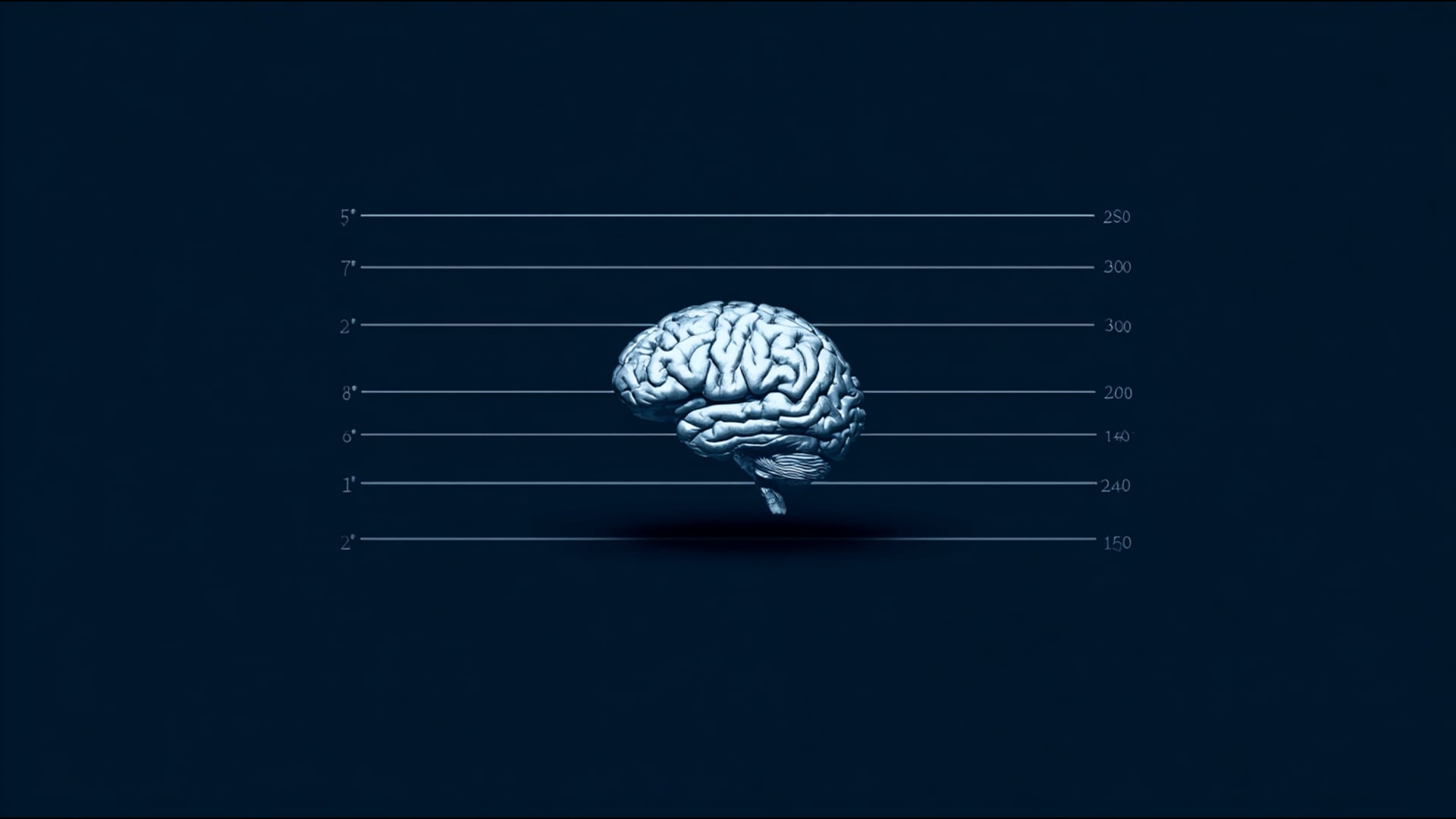
Every criminal case asks two questions: what the defendant did, and what was in his mind when he did it. For centuries the second question was answered by testimony — a psychiatrist's judgment, a mother's account of a childhood. Now it can be answered, or at least argued, with a picture of the brain. What should a court do with that picture?
In this TalksOnLaw interview, Joel Cohen sits down with Deborah Denno, the Arthur A. McGivney Professor of Law at Fordham and founding director of its Neuroscience and Law Center, whose empirical studies of hundreds of cases have made her the leading authority on how neuroscience is actually used — and misused — in American courtrooms.
Frontal Lobes and the Penalty Phase
Denno starts where the evidence appears most: capital sentencing. She describes the case of John McCluskey, who murdered a retired couple for their camper and whose jury, after hearing that he had frontal lobe damage affecting planning and intent, declined to impose death. That, she explains, is the norm. In the penalty phase of a capital trial, jurors may weigh anything that bears on culpability, from a defendant's religious faith to the fact that his mother loves him, and brain injury sits comfortably alongside childhood abuse and mental illness as mitigation. More than that: the Supreme Court has held that defense lawyers must investigate and present such evidence, and can be found constitutionally ineffective if they do not.
Guilt, Consciousness, and the Tumor
Neuroscience reaches the guilt phase less often, but Denno offers the cases where it has. Herbert Weinstein, with no history of violence, threw his wife from a window; a PET scan revealed a brain tumor, and the prosecutor reduced the charge from murder to manslaughter rather than face that evidence at trial. Peter Bradley's mid-flight rampage turned out to be encephalitis, and he was never charged. A woman who killed her mother on the sleeping pill Halcion was acquitted and later won a civil suit against the manufacturer. Sleepwalking cases end the same way. The principle, Denno explains, is old and settled: the criminal law punishes only conscious, voluntary acts. What is new is the evidence. The insanity defense — raised in roughly one percent of felony cases and won in only about a quarter of those, with the burden on the defense and many mentally ill defendants unwilling to plead it — has become a contest of brain scans rather than of two psychiatrists' impressions, which Denno regards as at least a step toward objectivity.
No Pass, and No Permanent Wiring
Denno takes on the public fear that a brain scan is a get-out-of-jail card. In her research the evidence is overwhelmingly used in death penalty cases, to argue for life rather than death, and juries frequently ignore it. A damaged brain, she cautions, does not necessarily explain behavior; some scans consistent with Alzheimer's belong to people functioning normally, and an expert can honestly say only that damage may have contributed. She also rejects the opposite stereotype, that brain damage is destiny: outside vegetative states, brains recover, and the "wired to kill" narrative is a myth. Where neuroscience has cut against defendants, she notes, it is usually because a defense lawyer put an unprepared expert on the stand who volunteered that his client might be dangerous, and the prosecutor pounced. And in some of her cases, brain scans have been used to show that a defendant claiming impairment was not impaired at all.
Ineffective Counsel and the Duty to Learn Science
The most consequential finding in Denno's work concerns the rare cases in which ineffective-assistance claims succeed. Almost always, she found, the reason is neuroscience: counsel never investigated a history of brain injury, school records, or IQ scores that were sitting in the file; never had the client examined; retained the wrong expert — a social worker testifying to neurological dysfunction — or examined the right one so badly that the expert did the prosecution's work. Her message to the bar is direct: a lawyer handling a capital case, and increasingly any serious criminal case, must be competent in this evidence.
Juveniles, Future Danger, and the Victim's Brain
Denno traces neuroscience's entry into constitutional law to Roper v. Simmons, where the Court relied in part on evidence of adolescent brain development to end the juvenile death penalty, and considers the harder question ahead: if the science ever reliably predicts future violence, she argues, the law will have to restrain its use rather than punish people for crimes they have not committed. Her newest research turns to the victim's brain, where prosecutors — not defense lawyers — introduce scans, and where more than forty percent of the cases involve "shaken baby syndrome." She explains why that evidence is so powerful (a hospital scan in hand within hours, often the only evidence in the case) and why it is so troubling: a clinical diagnostic label is being converted into proof of a defendant's mental state, on a scientific foundation that has never been replicated. When neuroscience is poorly used, she concludes, this is what it looks like.
What to Know Now
Denno's closing warning has since been vindicated in the courts. In November 2025 the New Jersey Supreme Court held in State v. Nieves that expert testimony diagnosing shaken baby syndrome or abusive head trauma from the triad of symptoms, without evidence of impact, is not generally accepted across the relevant scientific communities — including biomechanics — and is inadmissible, the first ruling of its kind by a state high court. In Texas, the scheduled execution of Robert Roberson, which would have been the first in a shaken-baby case, was halted in October 2024 and again in October 2025 so that his conviction could be reviewed under the state's junk-science statute; Denno was among the experts the national press turned to. The framework she describes for the insanity defense was tested in Kahler v. Kansas (2020), where the Supreme Court held that the Constitution does not require states to offer a moral-incapacity defense so long as mental illness may negate intent and be considered at sentencing. Roper's reliance on adolescent brain science extended to Miller v. Alabama (2012) and Montgomery v. Louisiana (2016), barring mandatory life without parole for juveniles and applying the rule retroactively, though Jones v. Mississippi (2021) declined to require a finding of permanent incorrigibility. McCluskey's jury ultimately deadlocked on death and he was sentenced to life; he died in federal prison in 2017. Denno's own database has grown to more than a thousand cases, and her findings — that neuroscience is overwhelmingly a tool of mitigation, that its most reliable effect is on ineffective-assistance claims, and that its greatest danger lies in prosecutorial use against defendants — remain the empirical baseline of the field.
About Prof. Deborah Denno
“In some cases, neuroscience is making the battle of [court] experts very different than it used to be.”
Deborah W. Denno is the Arthur A. McGivney Professor of Law at Fordham University School of Law and the Founding Director of Fordham's Neuroscience and Law Center, which provides evidence-based information to academics, lawyers, and the public about legally relevant advances in neuroscience. She teaches criminal law, criminal procedure, and torts, and her empirical research on the use of neuroscience evidence in criminal cases — now spanning more than a thousand cases — is the leading body of work in the field. Professor Denno has published widely on criminal law, criminal procedure, the death penalty, lethal injection, and the intersection of science and law, including on insanity, rape law, gender, and biological and genetic explanations of crime. Before joining the Fordham faculty in 1991 she clerked for Judge Anthony J. Scirica of the U.S. Court of Appeals for the Third Circuit. She holds a Ph.D. in criminology as well as a J.D. from the University of Pennsylvania, and was named one of the fifty most influential women lawyers in America by the National Law Journal.