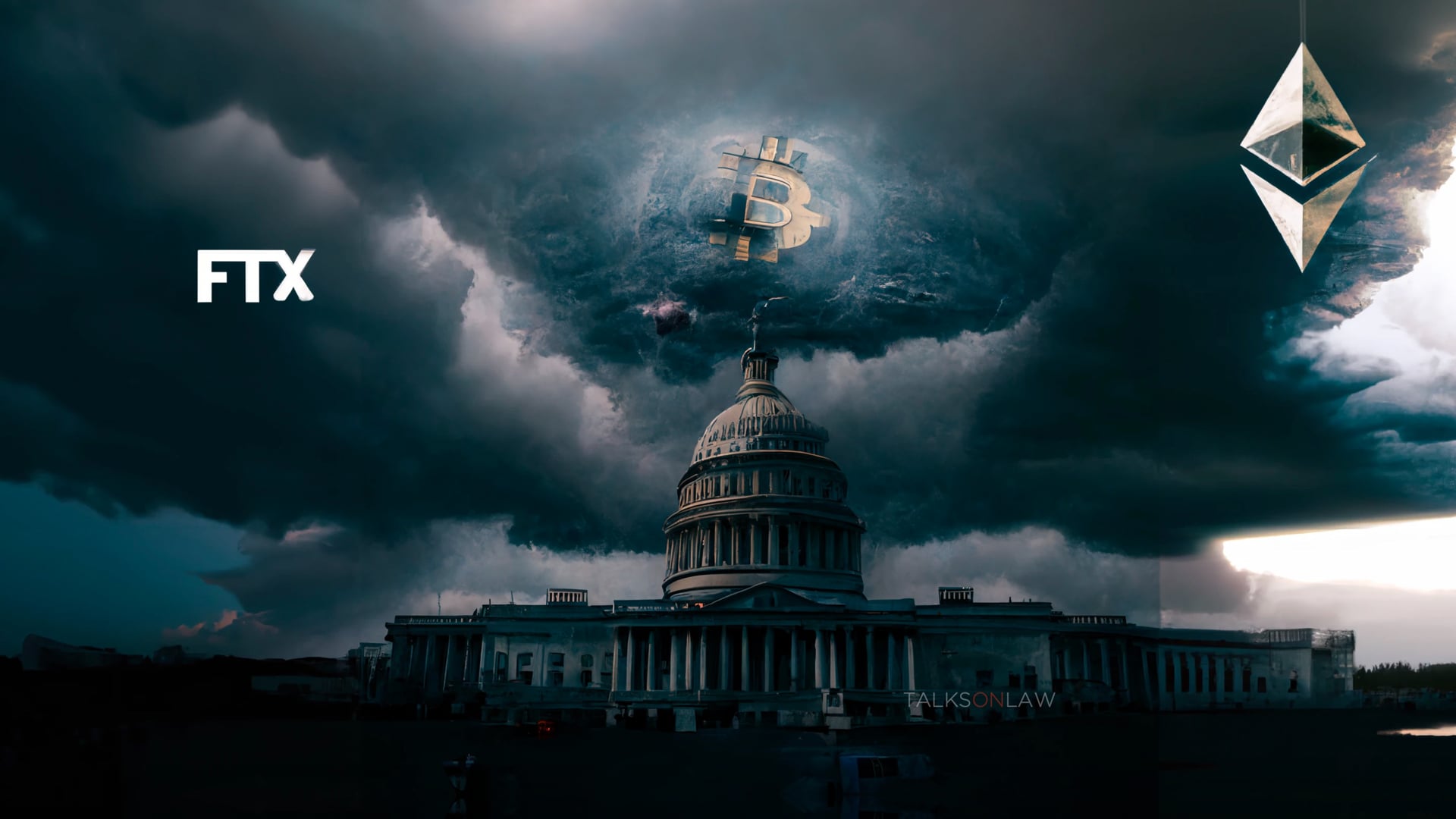
Is a cryptocurrency a security, a commodity, or something else entirely? The answer determines which regulator, if any, oversees it, and for years the SEC and the Commodity Futures Trading Commission (CFTC) offered very different visions. In this TalksOnLaw interview, recorded in November 2022, just days after the collapse of the FTX exchange, Joel Cohen speaks with J. Christopher Giancarlo, former chairman of the CFTC, who oversaw the launch of the first U.S.-regulated bitcoin futures markets and later co-founded the Digital Dollar Project.
Crypto as a New Architecture of Value
Giancarlo describes crypto not as a single asset class but as a set of internet protocols for recording who holds value and who is transferring it, comparing the shift to the move from proprietary telephone networks to the internet and to the railroads' transformation of regional economies. He explains why democratic societies accept a role for government in safeguarding people's savings, and why regulation, done right, can make new markets work better.
Security, Commodity, or Neither
Rather than asking what a crypto asset is, Giancarlo argues, regulators should ask what it does. If a token functions as an instrument of capital formation, the SEC has a role; if it functions like a commodity, as bitcoin and ether do, the CFTC does; and if it serves another purpose, such as a payment stablecoin, the banking regulators may be the right fit. He recounts how the CFTC came to treat bitcoin as a commodity, beginning with the 2015 Coinflip case, and allowed the first U.S.-regulated bitcoin futures to launch in 2017, and he criticizes then-SEC Chair Gary Gensler's view that most crypto tokens are securities.
FTX, Congress, and the CFTC's Approach
Speaking in the immediate aftermath of FTX's collapse, Giancarlo puts the failure in perspective, discusses the stablecoin and market-structure bills then pending in Congress, including the Digital Commodities Consumer Protection Act that would have given the CFTC authority over spot markets in digital commodities, and explains what set the CFTC apart: a principles-based rather than rules-based framework, a statutory mandate to foster innovation, and an aggressive enforcement record against crypto fraud and manipulation. He also discusses the challenge of regulating decentralized protocols, including the CFTC's case against the Ooki DAO, and his vision of "Quant Reg," in which regulators use blockchain data and analytics to monitor markets directly.
A Digital Dollar and Privacy
The conversation closes with central bank digital currencies. Giancarlo explains why the dollar's role as the world's reserve currency matters, describes China's digital yuan and its capacity for surveillance and censorship, and explains why the Digital Dollar Project urged experimentation rather than deployment. He argues that a well-designed U.S. digital dollar, bound by the First and Fourth Amendments, could offer more privacy than privately issued stablecoins, and that privacy, identity, and government access are design choices a free society should make deliberately.
What to Know Now
Much of what was uncertain when this conversation was recorded has since been resolved. FTX founder Sam Bankman-Fried was convicted of fraud and conspiracy in November 2023 and sentenced to 25 years in prison, but customer losses proved far smaller than first feared: under the bankruptcy plan confirmed in October 2024, about 98 percent of FTX creditors were slated to receive roughly 119 percent of their account values as of the November 2022 bankruptcy filing, with distributions beginning in 2025. The SEC approved spot bitcoin exchange-traded products in January 2024. Gary Gensler left the SEC in January 2025, and under new leadership the agency dismissed several major crypto enforcement cases, formed a crypto task force, and in August 2026 proposed rules offering exemptions and a safe harbor for crypto asset offerings. In July 2025 Congress enacted the GENIUS Act, the first federal framework for payment stablecoins. A broader market-structure bill dividing oversight between the SEC and CFTC, the CLARITY Act, passed the House in July 2025, but in September 2026 the Senate fell short of the votes needed to take it up, and the CFTC under Chairman Michael Selig is now exploring rules under its existing authority. The CFTC won a default judgment against the Ooki DAO in 2023. On the digital dollar, a January 2025 executive order bars federal agencies from establishing, issuing, or promoting a central bank digital currency, and the House passed a bill in 2025 that would ban one by statute.