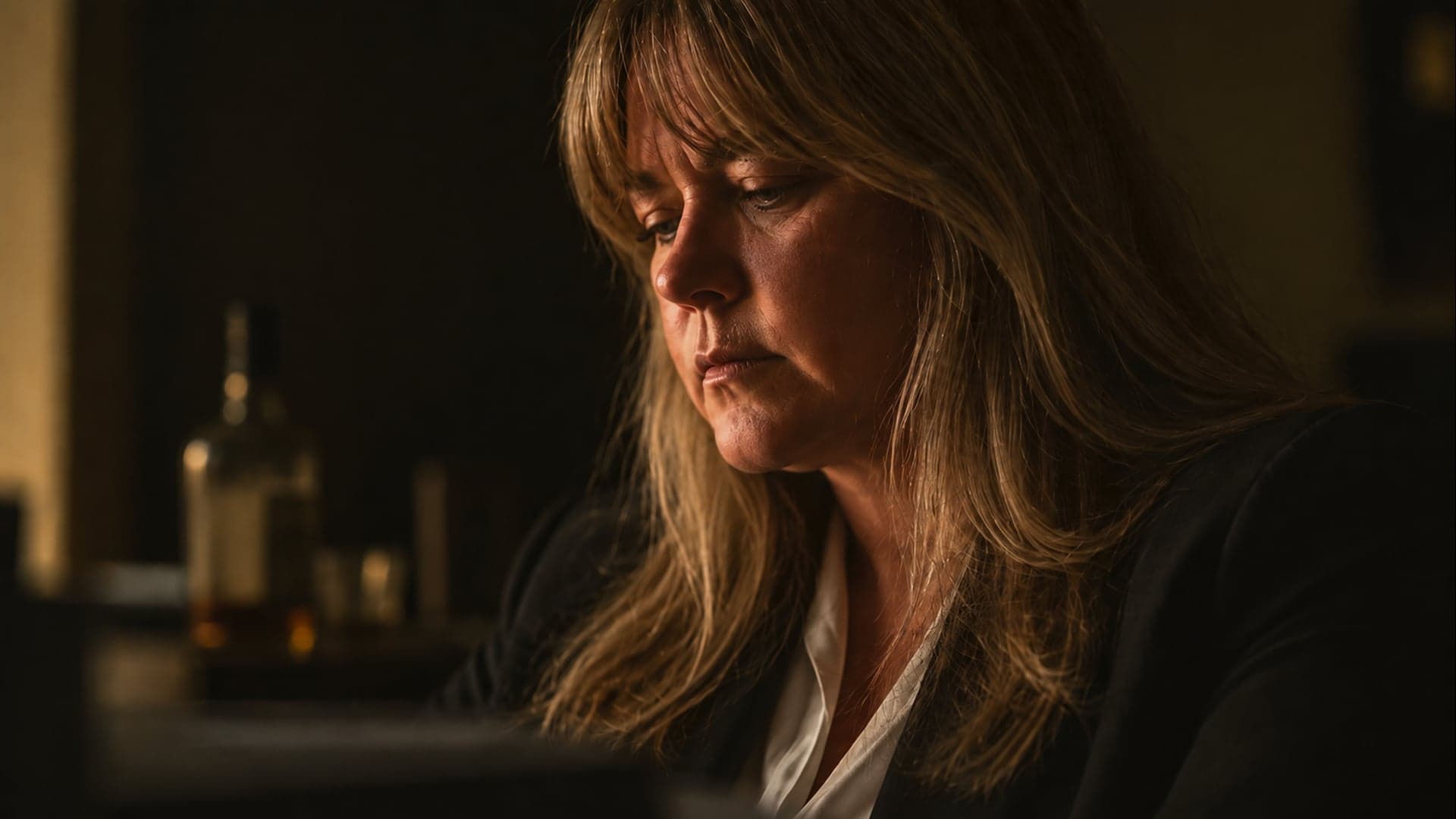
On Easter weekend in 2007, Brian Cuban's girlfriend found him passed out in his bedroom with cocaine, black-market Xanax, empty beer bottles, and evidence of another woman. His first thought was which lie to tell. His second was to ask her to drive him to a psychiatric hospital. By then he had been a problem drinker since college, a cocaine user for twenty years, bulimic, clinically depressed, and a practicing lawyer the whole time. He had argued for an emergency restraining order before a Dallas judge while high, with the drugs in his pocket.
In this TalksOnLaw interview, recorded in New York in 2018, Joel Cohen speaks with Brian Cuban, a Dallas lawyer, author of The Addicted Lawyer, and one of the profession's most prominent recovery advocates, about how addiction hides inside a career built on control, why lawyers are so reluctant to ask for help, and what law schools, firms, and colleagues can do differently.
A Profession in Denial
Cuban walks through the 2016 ABA and Hazelden Betty Ford study: roughly one in five practicing lawyers qualifies as a problem drinker, more than 30 percent of those in their first ten years of practice, and more than a quarter report depression. "If one in eight is a crisis," he asks of the national addiction figure, "what is one in three?" He explains why lawyers don't get help: a professional identity built on control, fear for the partnership track and the client book, and a "profession of thinkers" that is unusually good at thinking its way out of treatment. He takes on the distrust of lawyer assistance programs, which are confidential under state statutes or court and bar rules yet are rumored, on "triple hearsay," to be an arm of the bar. "There is no such thing as a high-functioning lawyer," he says. "It does not exist. It is a myth."
Law School and the Bar
Cuban describes drinking through the University of Pittsburgh School of Law, attending class drunk, bolting from his civil procedure professor, and running twenty miles a day to control his weight. He lays out what schools should do: a counselor on staff who understands law school and the character-and-fitness process, a wellness committee with student representatives, honest anonymous surveys, and more than a single orientation lecture. On bar admission, his advice to a student asking how to "spin" a drunk-driving arrest is blunt: "There's no spin. They're not stupid." Students who skip treatment to avoid disclosure, he argues, have it backwards; admission turns on conduct and candor, not on having sought help.
Cocaine as a Performance Enhancer
Cuban traces his first line in a Dallas hotel bathroom in 1987 and the twenty years that followed: using in law-firm and courthouse bathrooms, scheduling unnecessary out-of-town mediations to reach dealers, and the "name fame" of being Mark Cuban's brother, which he fed with fake business cards. He recounts the night in 2005 when he sat with a loaded .45 and his brothers intervened, and he is candid about what enabling means when the alternative is death: "Mark kept me alive." His advice for colleagues who see the signs, missed meetings, unreturned calls, unopened certified mail, is to pull the person over before the consequences of conduct catch up with the problem of addiction, and he tells the story of a colleague, Gary, whom nobody stopped in time.
What to Know Now
The profession has been resurveyed since the 2016 study. The ABA Commission on Lawyer Assistance Programs' 2026 study of roughly 37,000 lawyers in 28 jurisdictions found depression at 21.7 percent, anxiety at 20.4 percent, and risky drinking at 41.8 percent, with hazardous drinking down about ten points from 2016; nearly half reported high burnout, and 27 percent had considered leaving the profession. A 2023 study found lawyers twice as likely as the general population to report suicidal thoughts.
The character-and-fitness landscape Cuban criticizes has changed. New York dropped its mental-health question in 2020, and in April 2026 the National Conference of Bar Examiners removed the open-ended "any condition or impairment" question from its standard character report, in favor of conduct-based questions, such as whether an applicant engaged in misconduct from alcohol or drug use in the past three years; each jurisdiction decides whether to adopt the new questions. Continuing-education rules now push the subject: California requires two hours of competence credit each cycle, including an hour on prevention and detection of substance use and impairment, and New York accepts mental-health and well-being programs toward its ethics and professionalism requirement, though it has not adopted a standalone credit. New York's Judiciary Law § 499 makes communications with bar-sponsored lawyer assistance committees privileged on the same basis as attorney-client communications. The ABA Well-Being Pledge has about 257 signatory legal employers, and large firms have begun hiring full-time well-being directors. Cuban, in recovery since April 2007, continues to write and speak; his later books include the novels The Ambulance Chaser (2021) and The Body Brokers (2024).