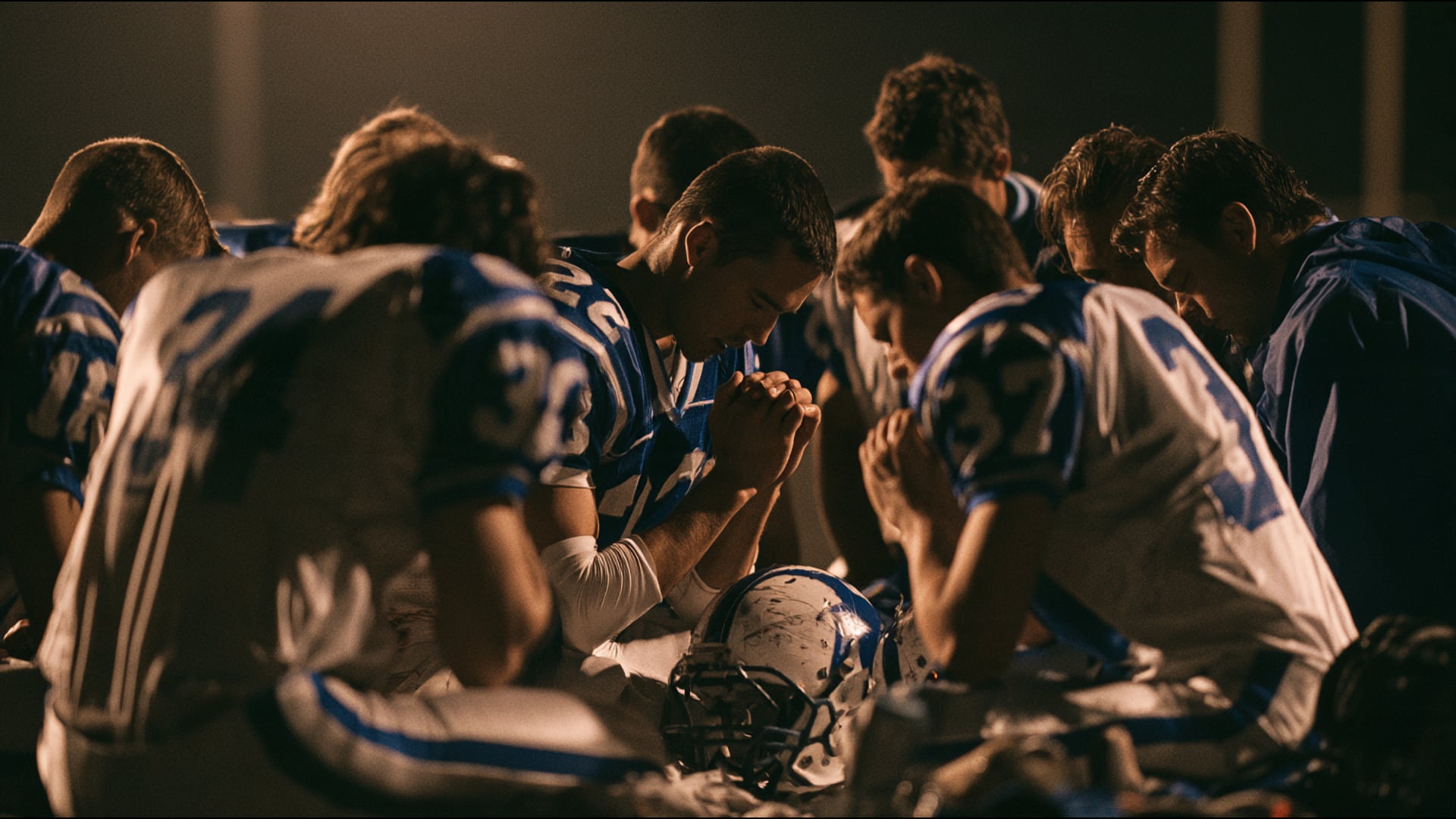
Football and prayer have been entwined in American high schools for generations, from locker-room invocations to the huddle at midfield. When Bremerton, Washington assistant coach Joseph Kennedy kept kneeling to pray on the 50-yard line after games, and his school district stopped him, the dispute went all the way to the Supreme Court. In Kennedy v. Bremerton School District (2022), the Court sided with the coach, and in doing so changed how courts decide whether government has crossed the line between church and state.
In this TalksOnLaw interview, recorded in 2022, Joel Cohen speaks with Sarah Barringer Gordon, then the Arlin M. Adams Professor of Constitutional Law and Professor of History at the University of Pennsylvania and a leading historian of religion and American law, about the case, the doctrine it rewrote, and the long and surprising history of religion, public schools, and football at the Supreme Court.
Prayer at Midfield
Gordon walks through the facts, many of them disputed between the majority and the dissent: years of prayer with players, the district's directives, and the crowded post-game scene captured in a photograph reproduced in Justice Sotomayor's dissent. The majority treated Kennedy's prayer as brief, quiet, and private; the dissent saw a school official leading a public religious display in front of students who depended on him for playing time. Gordon explains why the case pits the Free Exercise and Free Speech Clauses against the Establishment Clause, and why coaches occupy such an unusual place in students' lives.
From Lemon to History and Tradition
For half a century courts applied the three-part test of Lemon v. Kurtzman (1971), asking about a law's purpose, its effect, and whether it entangled government with religion, later supplemented by an "endorsement" inquiry. Gordon explains how Kennedy declared that the Court had long since abandoned Lemon and instead looked to historical practices and understandings, with coercion as the key concern. She discusses what that shift means, the challenges of asking judges to act as historians, and how the Court's recent decisions on religious schools and public funding, including Trinity Lutheran and Carson v. Makin, fit together.
Religion in the Schoolhouse
Gordon traces the history behind today's fights: the postwar rise of high school football, the school prayer decisions of the 1960s, the graduation prayer in Lee v. Weisman, student-led prayer over the loudspeaker in Santa Fe Independent School District v. Doe, which also arose from high school football, religious dress rules for teachers, and Washington's refusal to fund ministry students in Locke v. Davey. She also discusses Shurtleff v. City of Boston (2022), in which the Court held that Boston could not refuse to fly a Christian flag on a City Hall flagpole it had opened to private groups, and how much room remains for students to feel coerced.
What to Know Now
Joseph Kennedy was reinstated after the decision, coached one game in the fall of 2023, and then resigned, citing a family illness and what he described as retaliation.
The Court has continued to expand religious-liberty protections. In Groff v. DeJoy (2023), it unanimously held that an employer must show "substantial increased costs" before refusing a religious accommodation under Title VII. In Mahmoud v. Taylor (2025), it held 6–3 that parents have a free-exercise right to opt their children out of public school lessons using LGBTQ-themed storybooks. In Catholic Charities Bureau v. Wisconsin Labor and Industry Review Commission (2025), it unanimously held that denying a religious employer a tax exemption because it does not proselytize or serve only co-religionists is unconstitutional denominational discrimination. The Court split 4–4, with Justice Barrett recused, in Oklahoma Statewide Charter School Board v. Drummond (2025), leaving in place an Oklahoma ruling that barred the nation's first religious public charter school without setting national precedent.
The Establishment Clause has returned to the center of school litigation. Louisiana and Texas now require public school classrooms to display the Ten Commandments. In 2026 the full Fifth Circuit allowed both laws to take effect: it found the Louisiana challenge premature, and it upheld the Texas law, reasoning that because Kennedy confirmed the Court's abandonment of Lemon, little remains of the Supreme Court's 1980 decision in Stone v. Graham striking down a similar Kentucky law. Petitions asking the Supreme Court to review both cases are pending. The Court will also hear argument on November 3, 2026, in St. Mary Catholic Parish v. Roy, a Catholic preschool's challenge to Colorado's universal pre-K nondiscrimination rules, and has been asked to overrule Locke v. Davey.