Zackey Rahimi was the subject of a domestic violence restraining order, was found with guns, and was involved in five shootings in two months. If the Second Amendment permits any disarmament, says Joseph Blocher, this is it: "that's about as low-hanging fruit as you can get." The Supreme Court agreed, 8 to 1, in June 2024. The harder question is what United States v. Rahimi tells the lower courts about everyone else, from felons to eighteen-year-olds to the owners of bump stocks, whose ban the Court struck down the same month in Garland v. Cargill.
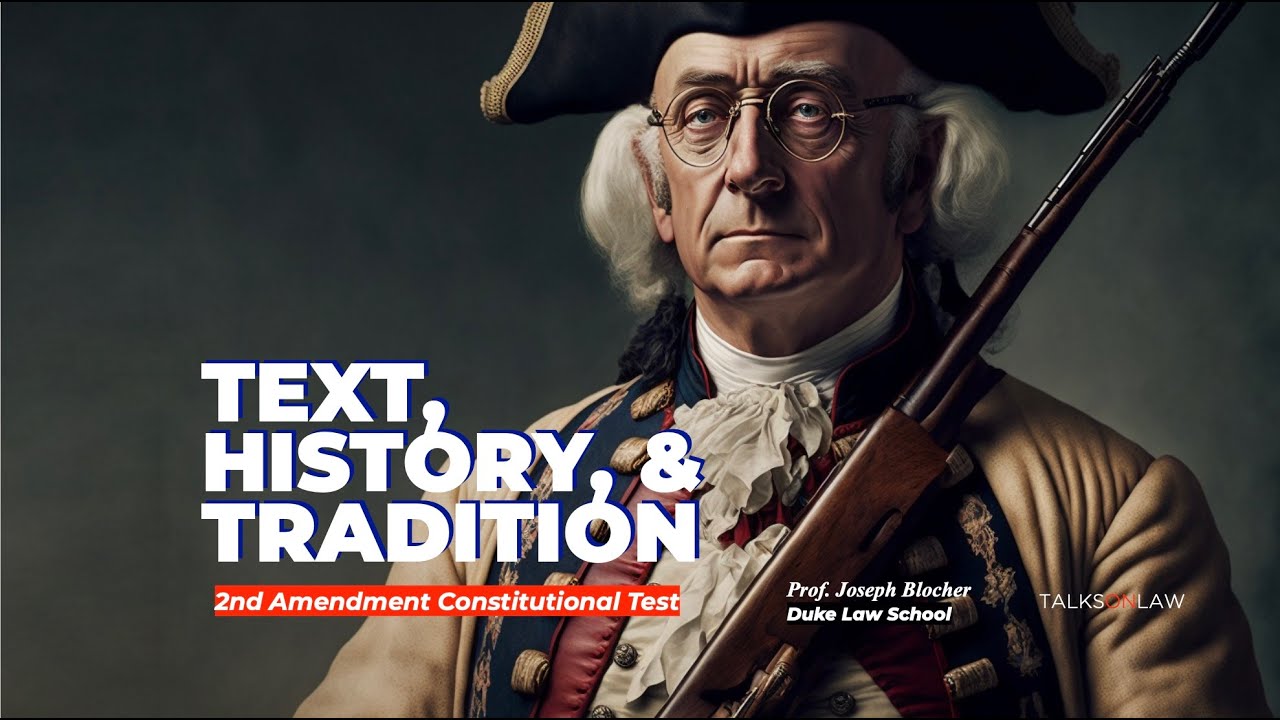
In this TalksOnLaw interview, recorded days after the Rahimi decision in June 2024, Joel Cohen speaks with Joseph Blocher, the Lanty L. Smith '67 Distinguished Professor of Law at Duke Law School and co-founder of the Duke Center for Firearms Law, about the Court's two end-of-term gun rulings, what each did and did not decide, and where the Second Amendment goes from here.
Rahimi: Bruen Clarified
Blocher explains what the Fifth Circuit got wrong under Bruen: it searched for a "historical twin" to the federal ban on guns for people under domestic violence orders, found none, and struck the law. The Chief Justice's majority, Blocher says, insists on reasoning from principles, finding in the founding-era surety and "going armed" laws a tradition of disarming people who are found to pose a credible threat to others. He walks through the six separate opinions, including Justice Thomas's lone dissent and the concurrences in which the justices debated how originalism is supposed to work, and explains why "clarifying" Bruen rather than revisiting it may be the most important thing the Court did.
What Rahimi Leaves Open
The decision rests on an individualized judicial finding of dangerousness, which means, Blocher cautions, that "I'm not sure Rahimi resolves whether the felon prohibitor is constitutional," let alone magazine capacity limits, restrictions on minors or people under indictment, or red-flag laws. He discusses the Range litigation over nonviolent felons and the hundreds of Section 922(g) challenges then moving through the courts.
Cargill: A Statute, Not the Second Amendment
Turning to bump stocks, Blocher describes how the device uses recoil to fire 400 to 800 rounds a minute, the ATF rule adopted after the Las Vegas massacre treating them as machine guns, and the 6–3 decision holding that a bump stock does not fire multiple rounds "by a single function of the trigger," complete with Justice Thomas's trigger diagrams and Justice Sotomayor's rejoinder that if it walks and quacks like a duck, it is a duck. "It is emphatically not a Second Amendment case," he stresses; Justice Alito's concurrence all but invited Congress to fix the statute. He closes with a preview of VanDerStok, the ghost-gun case the Court had just agreed to hear.
What to Know Now
The Court decided Bondi v. VanDerStok in March 2025, upholding ATF's ghost-gun rule 7 to 2. The Third Circuit, sitting en banc, held in December 2024 that the felon ban could not be applied to Bryan Range, and the Justice Department did not seek review; the Court has since denied certiorari in other felon-prohibitor cases, including Zherka and Duarte (January 2026) and Vincent (March 2026), leaving a split in place. In June 2026 the Court decided two more Second Amendment cases, United States v. Hemani (June 18), on the ban for unlawful drug users, and Wolford v. Lopez (June 25, 6–3), on Hawaii's default rule barring guns on private property open to the public, and on June 30 it granted certiorari in Viramontes and Grant, the first assault-weapon and magazine cases it has agreed to hear since Heller; argument is set for December 2, 2026. The Court denied review of the challenges to age limits for 18-to-20-year-olds, leaving the Fifth Circuit's Reese decision striking the federal handgun-purchase age in place. On the executive side, the Justice Department created a Second Amendment Task Force in April 2025, ATF announced some thirty-four regulatory changes in April 2026, including removal of the bump-stock language from its regulations, and Congress has not amended the machine-gun statute. Professor Blocher's casebook on firearms law was published in 2025.